
The important question is what the pattern does to the person
An eating schedule can begin as a practical experiment and gradually become a rule that governs the rest of the day. The clock determines when hunger is allowed to matter; a larger meal then seems to demand compensation; tomorrow’s fast becomes longer. At that point the question is no longer whether fasting sounds biologically plausible. It is whether the pattern is supporting a person’s life or narrowing it.
Feeling hungry after a period without food is not, by itself, evidence of an eating disorder. Nor does enjoying a large meal establish that someone has lost control. It is important to avoid turning ordinary appetite into a diagnosis. The more informative questions concern distress, rigidity, secrecy, repeated compensation and the ability to respond flexibly when circumstances change. Those patterns deserve attention without shame.
I prefer to describe appetite as information rather than a test of character. That does not make every sensation an infallible instruction, but it removes the assumption that stronger hunger proves weakness. An eating plan should make room for nourishment, concentration, relationships and appropriate medical care. If preserving the schedule begins to displace those purposes, the schedule needs examination rather than stronger enforcement.
Evidence: fasting does not reliably make hunger disappear
In a randomized trial of early time-restricted eating combined with energy restriction, participants generally condensed their existing eating patterns into a shorter window. Compared with the control eating schedule, several overall appetite and eating-behaviour measures did not differ, while participants in the early-window group were hungrier during the fasting period. The study did not establish that a shorter window automatically improves diet quality or removes the drive to eat. [1]
This is a useful corrective to a common promise. Someone who remains hungry has not necessarily performed the method incorrectly. Trial averages also do not tell us what any particular person will experience or whether a routine will remain workable outside a supported research setting. A schedule that sounds simple can have very different consequences when work, care responsibilities and social meals are included.
It is also important to define what counts as success. A person may follow the window while eating inadequately, thinking constantly about food or avoiding social contact. Another may choose a more regular pattern and function better. Compliance is a description of behaviour, not a complete health outcome. The relevant assessment should include the effect of the approach on wellbeing and daily life, not merely the number of days a rule was followed.
Evidence: association with disordered eating is a warning, not proof of causation
A Canadian study of adolescents and young adults found associations between intermittent fasting and eating-disorder behaviours and psychopathology. It was an observational study, so it cannot establish that fasting caused those difficulties. People already concerned about weight or eating may be more likely to adopt fasting, and other factors can influence both. Nevertheless, the association is a reason to ask about vulnerability rather than assume that a popular method is psychologically neutral. [2]
This distinction helps avoid two unhelpful conclusions. It would be wrong to claim that everyone who fasts will develop an eating disorder. It would also be wrong to dismiss a person’s worsening preoccupation because a study did not prove causation. The individual experience still needs assessment. Evidence can be uncertain about the direction of an association while a person’s distress remains clear and deserving of help.
The safest use of this research is to widen the questions asked before and during an eating change. What happens when a planned meal is delayed? Is a social invitation avoided because food will be present? Does eating outside the window produce guilt or a need to compensate? These questions are not a self-diagnostic score. They are ways to make an otherwise invisible cost visible during a conversation with a professional.
Practical implications: distinguish hunger, overeating and loss of control
NIDDK describes binge eating in terms of consuming a large amount in a short period while feeling unable to control the eating. Associated experiences can include eating quickly, continuing to uncomfortable fullness, eating alone from embarrassment and feeling distress afterwards. These features are different from simply eating more than usual after a demanding day. A clinician considers the pattern and its context rather than diagnosing from one meal. [3]
Pay attention to the language used around the meal. Words such as cheating, earning or repayment can indicate that food is becoming part of a moral accounting system. These words do not establish a diagnosis either, but they can obscure the practical question: was enough food available earlier, and what made the meal difficult? Replacing judgement with description makes it easier to ask for help before the pattern becomes more entrenched.
Avoid using the next day’s restriction as a way to erase an uncomfortable eating episode. That response can leave the underlying problem unexplored while increasing pressure around the next meal. If the pattern repeats, seek advice from a professional experienced in eating disorders. Someone does not need to wait for a particular weight, appearance or severity threshold before discussing distress and loss of control.
Practical implications: regular eating can be a treatment priority
NICE guidance for binge-eating disorder includes establishing regular meals and snacks to avoid hunger and advises against trying to lose weight by dieting during treatment because this is likely to trigger binge eating. This recommendation belongs to a clinical treatment context, not a universal instruction that every person must eat at identical times. It illustrates why an appropriate therapeutic goal can be stability rather than further restriction. [4]
If a restrictive schedule has become difficult, the next step should not automatically be a more sophisticated schedule. It may be support in re-establishing adequate, predictable eating and reducing the fear attached to ordinary meals. A clinician or dietitian trained in disordered eating can help tailor that process. The aim is not to exchange one inflexible rule for another, but to create enough reliability that the day is no longer organized around compensation.
Practical support can be ordinary: making food available during a work break, planning an accessible lunch or asking a trusted person to share a meal. The best option depends on the circumstances. Food insecurity, shift work and caregiving can disrupt eating independently of any chosen fasting plan. Advice should address those barriers directly instead of treating every irregular pattern as a failure of motivation or self-control.
Safety boundaries: pregnancy, medicines and previous eating disorders
Fasting should not be treated as a casual self-experiment during pregnancy or breastfeeding. NIH advises professional discussion in these circumstances and when insulin or other diabetes medicines are being used. A general theory about meal timing cannot determine whether nutritional needs and treatment safety are being met. This article does not endorse fasting during pregnancy or provide a protocol intended to make restriction safe without appropriate care. [5]
People taking glucose-lowering medicines need individualized advice before changing eating times. A pattern that delays meals can interact with treatment and increase hypoglycaemia risk. Hunger, shaking or other symptoms should not be dismissed as evidence that a fast is working. Follow the established diabetes safety plan and seek professional guidance rather than trying to preserve a window at the expense of treatment. The relevant advice depends on the actual medicine and clinical situation. [6]
A current or previous eating disorder also changes the conversation. Do not begin or intensify restrictive fasting without specialist advice, and raise any return of rigid rules, compensation or loss of control. No unsupervised extended fast is recommended here. The ability to tolerate a shorter restriction does not establish safety for a longer one, and the absence of dramatic symptoms does not prove that a pattern is nutritionally or psychologically appropriate.
Limits and unanswered questions: context matters more than a single appetite rating
Appetite studies often depend on questionnaires and selected volunteers observed for a limited period. A rating taken at a set time cannot capture every aspect of a person’s relationship with eating. Trials may also exclude people whose risks are greatest. These features do not make the research useless; they mean that a reassuring average should not be used to dismiss a problem that appears in an individual setting.
The word rebound can also conceal different processes. It may refer to ordinary hunger after inadequate intake, a reaction to a rigid rule, emotional eating or a clinically significant loss-of-control pattern. They should not be collapsed into one explanation. If the experience is distressing, a careful history is more useful than deciding in advance that the cause must be poor regulation, hormones or insufficient discipline.
There are important unanswered questions about which eating approaches remain sustainable for different groups and how risks change over time. Research on metabolic outcomes and research on eating-disorder vulnerability need to inform one another. Until those questions are better resolved, a sensible boundary is to avoid methods that are already making eating more fearful or compulsive. Uncertainty is a reason for a cautious, responsive plan, not permission to persist regardless of consequences.
An author framework must not become another demand
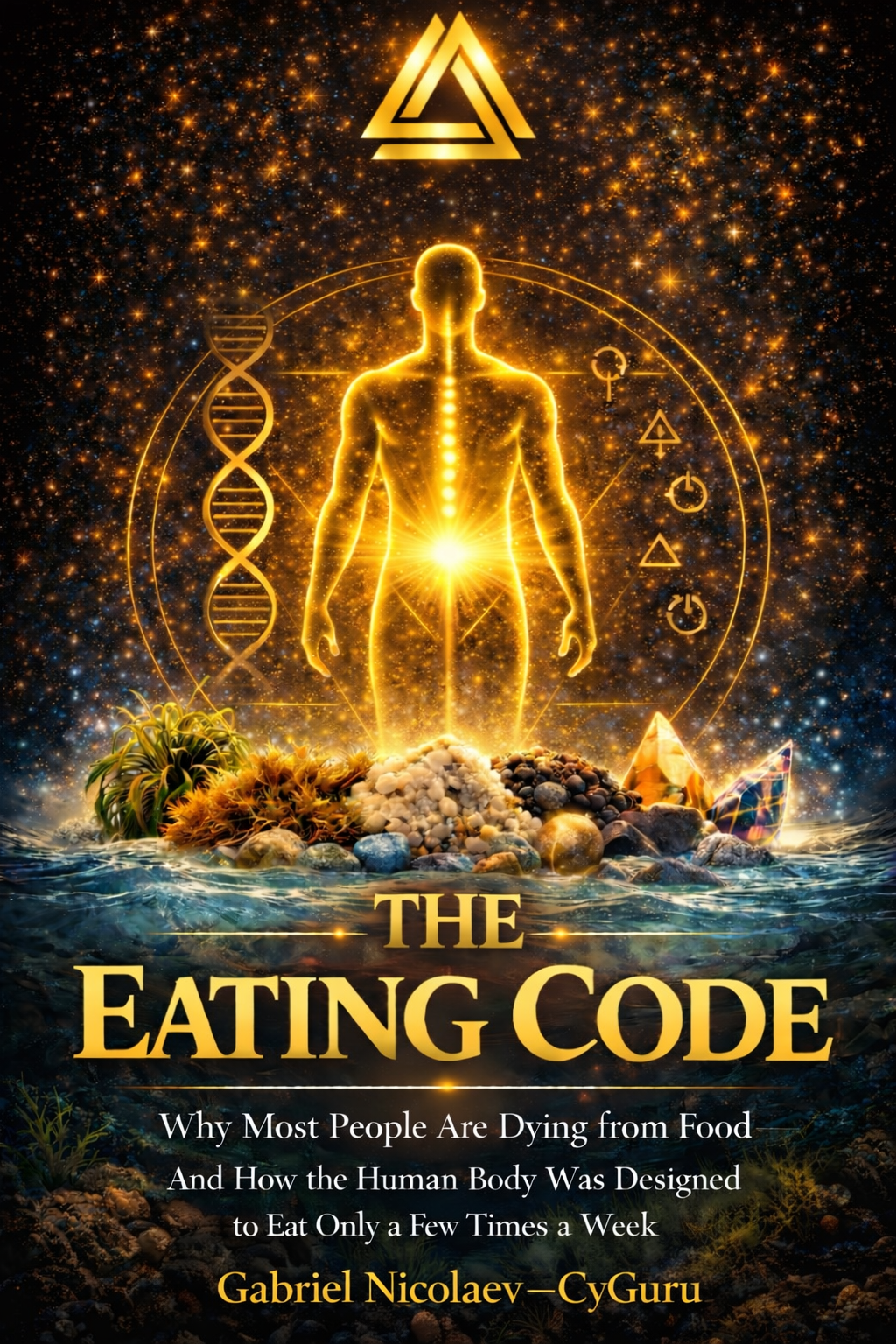
The official description of The Eating Code presents a strong author perspective on meal frequency and biological rhythms. That perspective should remain distinct from clinical evidence. Hunger is not proof that healing has begun, and a person who needs regular meals is not preventing recovery by eating. Those claims would turn an interpretive idea into a judgement that the available research does not justify.
Within my broader approach, attention should create room for a more workable relationship with the body. If the language of alignment or rhythm makes a person afraid to eat when needed, it has ceased to be useful in that context. The person does not owe loyalty to a framework at the expense of health. A sound explanation must remain open to correction by the experience and needs it is supposed to illuminate.
The practical conclusion is therefore modest and humane. Notice the effect of the pattern, seek help when eating becomes distressing and allow an appropriate care plan to take priority over a rule. Nourishment should support participation in life. When the schedule starts consuming more attention than the meal provides, stepping back can be a thoughtful decision rather than a failure.
Related reading
- Time-Restricted Eating: Separate the Clock from the Calorie Deficit
- Fasting and Autophagy: Human Evidence Beyond the Countdown
- Meal Timing and Circadian Metabolism: The Clock Is Part of the Context
- Ultra-Processed Foods: Read the Pattern, Not Just the Label
Author and medical note
Written by Gabriel Nicolaev – CyGuru. This is general educational writing and author analysis, not a personal diagnosis or treatment plan. Discuss symptoms, treatment changes and supplement interactions with a qualified clinician. No independent medical review is claimed.
References
- Steger et al. Impact of Early Time-Restricted Eating on Diet Quality, Meal Frequency, Appetite, and Eating Behaviors: A Randomized Trial. Obesity, 2023.
- Ganson et al. Intermittent fasting: Describing engagement and associations with eating disorder behaviors and psychopathology among Canadian adolescents and young adults. Eating Behaviors, 2022.
- NIDDK. Symptoms & Causes of Binge Eating Disorder.
- NICE. Eating disorders: recognition and treatment (NG69), recommendations.
- NIH News in Health. To Fast or Not to Fast.
- NIDDK. Low Blood Glucose (Hypoglycemia).