
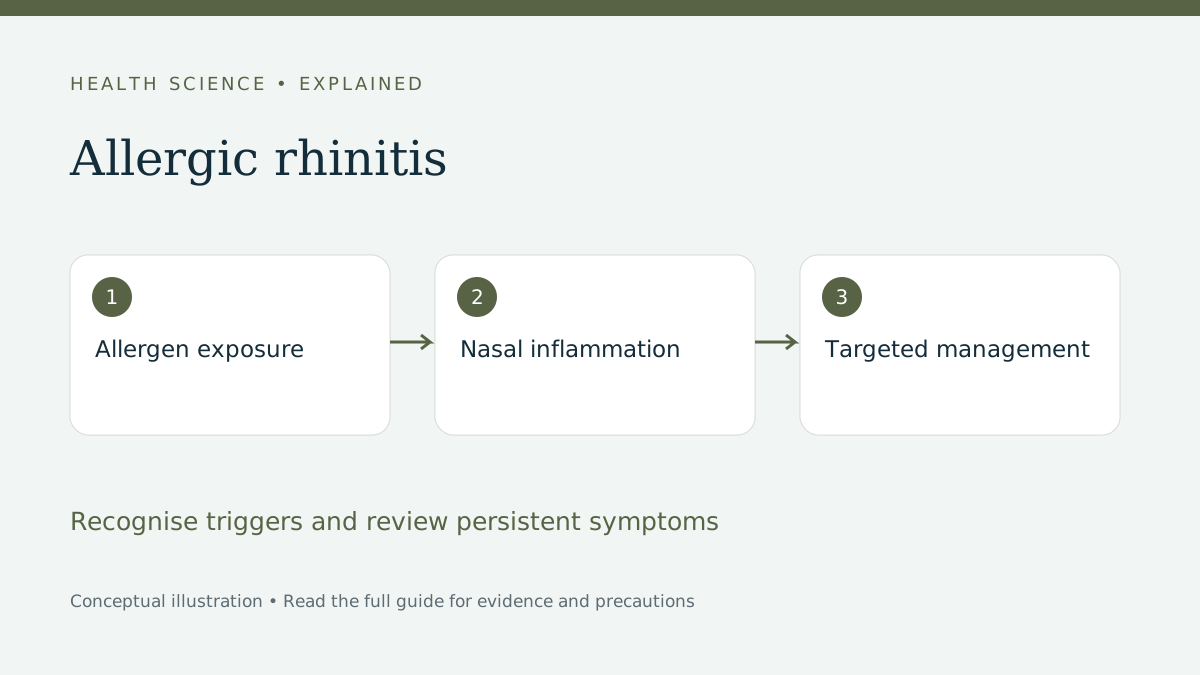
A blocked or running nose can look like a minor inconvenience while quietly disrupting sleep, concentration and exercise. Allergic rhinitis is one possible cause, especially when sneezing, itching and watery eyes occur together. Treating it well begins with recognising the pattern rather than buying the strongest product labelled sinus relief.
Different treatments solve different parts of the problem. An antihistamine, a steroid nasal spray, a decongestant and a saline rinse are not interchangeable. Understanding their roles can prevent a cycle of brief relief, rebound congestion and unnecessary product switching.
First identify the pattern
The NHS describes allergic rhinitis as a reaction to allergens such as pollen, dust mites, animal dander or mould. Symptoms can begin soon after exposure and include sneezing, an itchy nose, blockage, discharge and irritated eyes. Some people have seasonal symptoms; others experience problems throughout the year.
Not every episode of congestion is allergic. Irritants, infections and structural problems may produce overlapping symptoms. A useful history records when symptoms appear, where they improve, whether a pet or workplace exposure is relevant and which treatments have actually been tried. The goal is to find a repeatable pattern, not to assume that every substance encountered is an allergen.
Seek assessment if the cause is uncertain, symptoms impair daily life, pharmacy treatment fails or asthma worsens. The presence of both nasal and chest symptoms is worth mentioning explicitly. Breathing difficulty is not simply a more severe version of a stuffy nose.
Antihistamines and practical alertness
Antihistamines reduce histamine-related allergy symptoms. NHS medicines guidance distinguishes sedating antihistamines from options less likely to cause drowsiness. Even a product described as non-drowsy can make some people sleepy. Driving, operating machinery and combining medicines with alcohol require attention to the actual effect and the product instructions.
Check cold remedies and sleep aids before adding an allergy tablet; some already contain an antihistamine. A pharmacist can identify duplication and help choose a preparation appropriate for age, pregnancy, other conditions and existing medicines. Taking several products with different brand names does not necessarily mean they contain different drugs.
Judge the result against the symptom being treated. Reduced itching and sneezing may be useful even if congestion remains, but persistent obstruction may call for a different component of treatment. The answer is not automatically a higher dose of the same tablet.
Steroid sprays require a different expectation
NHS guidance on fluticasone nasal spray explains that it reduces nasal inflammation and needs regular use to work. It should not be judged as though it were an instant decongestant. When prescribed or recommended, following the schedule consistently is more informative than alternating a few doses with long gaps.
Technique matters. Follow the leaflet, prepare the device as directed and ask a pharmacist to demonstrate if the spray seems to run straight down the throat or causes repeated irritation. Aim according to the product instructions, generally away from the nasal septum, and avoid forceful sniffing. Recurrent nosebleeds or persistent irritation deserve review.
The word steroid can create unnecessary hesitation when different routes and doses are conflated. A nasal preparation is chosen for local nasal treatment, but it still has instructions and possible adverse effects. Discuss concerns directly so that a useful treatment is neither avoided through fear nor overused through misplaced confidence.
Saline rinsing is simple, but water safety matters
Saline can help wash mucus and irritants from the nose. CDC advises using distilled, sterile, or previously boiled and cooled water for nasal irrigation. Water that is safe to drink is not automatically suitable for introducing into the nasal passages. Use an appropriate saline preparation and follow the device's cleaning and drying instructions.
Do not add essential oils, fragrances or herbal extracts to an irrigation device. Such additions change a familiar saline rinse into an untested mixture. Keep the equipment personal and store it in a way that allows it to remain clean. People with particular medical vulnerabilities should ask their clinician whether irrigation is appropriate.
The value of rinsing should be judged by comfort and function. It is not a method of sterilising the body, and it does not prove that a microbial cause was present. If rinsing is painful or symptoms worsen, stop and seek advice rather than forcing the procedure.
Avoid the decongestant trap
Nasal decongestants may offer rapid relief, but prolonged use can worsen congestion. Current NHS rhinitis advice limits their use to no more than five days, while the exact product leaflet and professional advice remain important. People can mistake rebound blockage for worsening allergy and respond with ever more frequent spraying.
If a spray has become something needed repeatedly just to breathe through the nose, bring the bottle to a pharmacist or clinician. Explain how long it has been used rather than simply asking for a stronger alternative. Distinguishing rebound congestion from the original problem is part of recovering control.
Build a manageable routine
Choose targeted exposure measures based on the likely trigger, rather than buying a collection of devices before the pattern is understood. Review the bedroom, work environment and seasonal exposure where relevant. Keep a brief symptom record and allow the agreed treatment an appropriate trial before deciding it has failed.
If asthma is also present, maintain the separate asthma action plan. If cough continues after a cold, the postinfectious cough guide explains why reassessment may be needed. A coherent routine should reduce symptoms and make daily life easier without turning every day into a new experiment with products.
Continue reading
Asthma Inhalers: Understanding Control, Relief and Your Action Plan · A Cough After a Cold: Recovery, Reassessment and Warning Signs
About the author
Medicinas Editorial Team prepares educational articles by comparing clinical guidance and research with practical questions readers bring to everyday health decisions.
Medical note
This article provides general education, not a diagnosis or an individual treatment plan. Discuss persistent symptoms, medicines and supplement choices with an appropriately qualified clinician or pharmacist.