
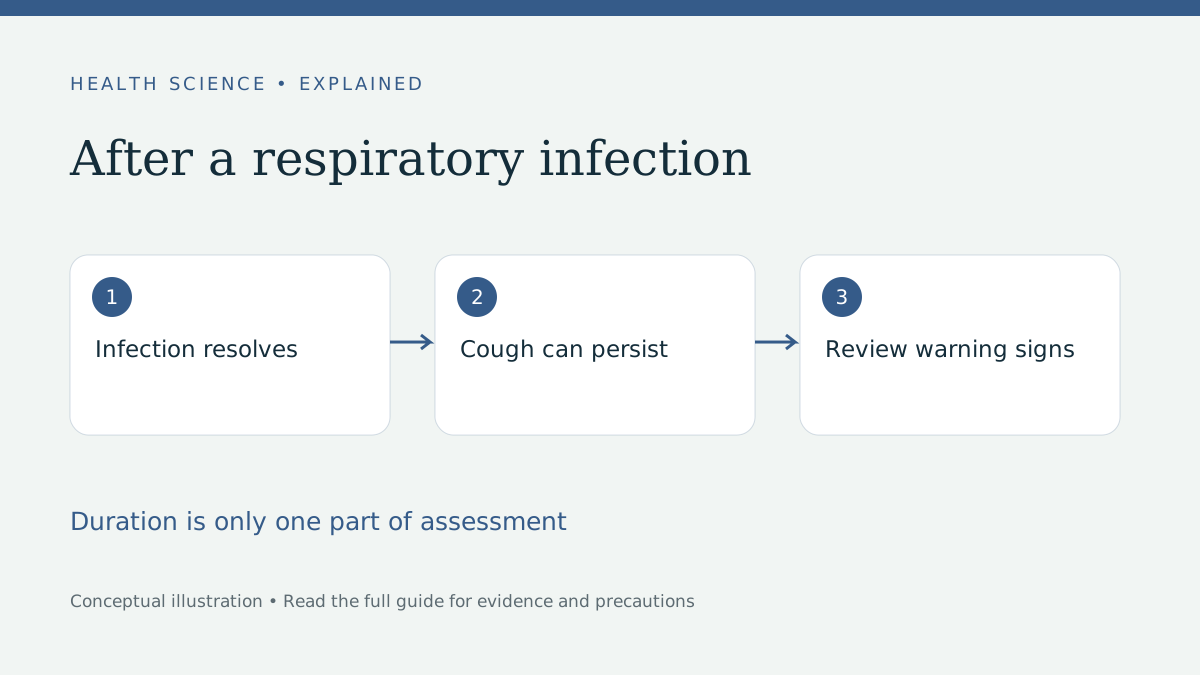
The fever and sore throat have settled, but the cough remains. This common sequence can be frustrating because a lingering symptom feels like evidence that the infection never ended. Sometimes a cough does persist while the airways recover. At other times, a different condition or complication explains why it continues. The distinction depends on the whole pattern, not on the calendar alone.
Postinfectious cough is a clinical explanation reached after considering alternatives. It should not become a label that dismisses worsening breathlessness, blood in sputum or a new fever. A sensible approach combines patience for expected recovery with a definite plan for reassessment.
Why the cough can outlast the initial illness
A CMAJ clinical summary describes postinfectious cough as a cough lasting roughly three to eight weeks after a respiratory infection. Inflammation can leave the airways more sensitive, with changes in mucus production and clearance. The initial trigger may have gone while the cough response remains easily provoked.
The same summary stresses excluding other explanations, including asthma, chronic obstructive pulmonary disease, reflux and certain medicines. This is why cough duration alone cannot establish the diagnosis. A clinician may need to ask about prior episodes, smoking, medication changes and whether the cough is accompanied by wheeze or other symptoms.
Improvement over time provides useful context but does not substitute for assessment when warning signs occur. A cough that is gradually becoming less frequent is a different story from one that improves and then returns with significant systemic illness. Both the sequence and the current severity matter.
Why another antibiotic may not be the answer
CDC guidance explains that uncomplicated chest colds, or acute bronchitis, usually do not benefit from antibiotics. Antibiotics target susceptible bacteria; they do not automatically shorten an irritated-airway cough after a viral illness. Unnecessary use adds risks without resolving the actual mechanism.
There are exceptions that require a different diagnosis, such as pneumonia or pertussis. The point is not that antibiotics are never appropriate for someone who coughs. It is that the decision should follow clinical evidence of a condition likely to benefit. A leftover prescription or a previous episode treated with antibiotics is not enough to make that decision today.
Similarly, a product marketed for respiratory support does not identify why the cough is occurring. A soothing sensation may be welcome, but it should not be interpreted as proof that an infection is being eradicated. Avoid turning each additional week into another unplanned course of medicines or supplements.
What to record before an appointment
Write down the approximate start date, the initial illness and whether symptoms are improving, stable or worsening. Note nighttime disturbance, exercise-related cough, wheeze, reflux symptoms, nasal symptoms and exposures such as smoke or workplace dust. Include all medicines, because some blood-pressure treatments can cause cough.
Describe sputum and any blood accurately, but do not use colour alone to decide that antibiotics are needed. Explain whether eating, sleeping and ordinary activity are affected. If there is a pattern of recurrent prolonged cough after every cold, mention that rather than treating the present episode as completely isolated.
A short record is more useful than a long collection of untested theories. It helps a clinician decide whether examination, lung-function testing, imaging or a targeted treatment trial is appropriate. Not everyone needs every test; the reason for a test should connect to a specific question.
Comfort measures and their limits
CDC cold-care guidance supports rest, fluids and selected measures for symptom comfort, with care around age restrictions and medicine combinations. Honey may soothe cough in adults and children old enough to use it, but must not be given to infants under one year. A pharmacist can help avoid duplicate ingredients in multi-symptom preparations.
Consider the environment as well as the medicine cabinet. Smoke, aerosols or strongly scented products may be unpleasant during recovery. Keep expectations realistic: a comfort measure can make an evening more tolerable without shortening the underlying process. Persistent cough does not justify inhaling essential oils or putting unapproved liquids into a nebuliser.
For readers considering a botanical cough preparation, the thyme preparation guide explains why evidence for an extract cannot be transferred to an aromatherapy oil. That distinction matters particularly when the urge to try something stronger is driven by frustration.
Set a clear point for reassessment
NHS advice recommends medical review for a cough lasting more than three weeks. Seek more urgent assessment for breathing difficulty, chest pain, coughing blood, feeling very unwell or rapid worsening. People with weakened immunity or significant underlying illness should seek advice earlier rather than applying a general waiting period.
A cough beyond eight weeks falls outside the usual postinfectious interval and needs a broader evaluation. Even within that interval, failure to improve should prompt a discussion. If asthma is identified, treatment follows an asthma plan rather than indefinite cough suppression; our inhaler guide explains the distinction between relief and control.
Good reassurance is specific. It explains what recovery may look like, what would change the assessment and when to return. That gives a person permission to recover without repeated unnecessary treatment while keeping the threshold for further help visible.
Continue reading
Asthma Inhalers: Understanding Control, Relief and Your Action Plan · Allergic Rhinitis: Matching Sprays, Rinses and Trigger Control to Symptoms
About the author
Medicinas Editorial Team prepares educational articles by comparing clinical guidance and research with practical questions readers bring to everyday health decisions.
Medical note
This article provides general education, not a diagnosis or an individual treatment plan. Discuss persistent symptoms, medicines and supplement choices with an appropriately qualified clinician or pharmacist.