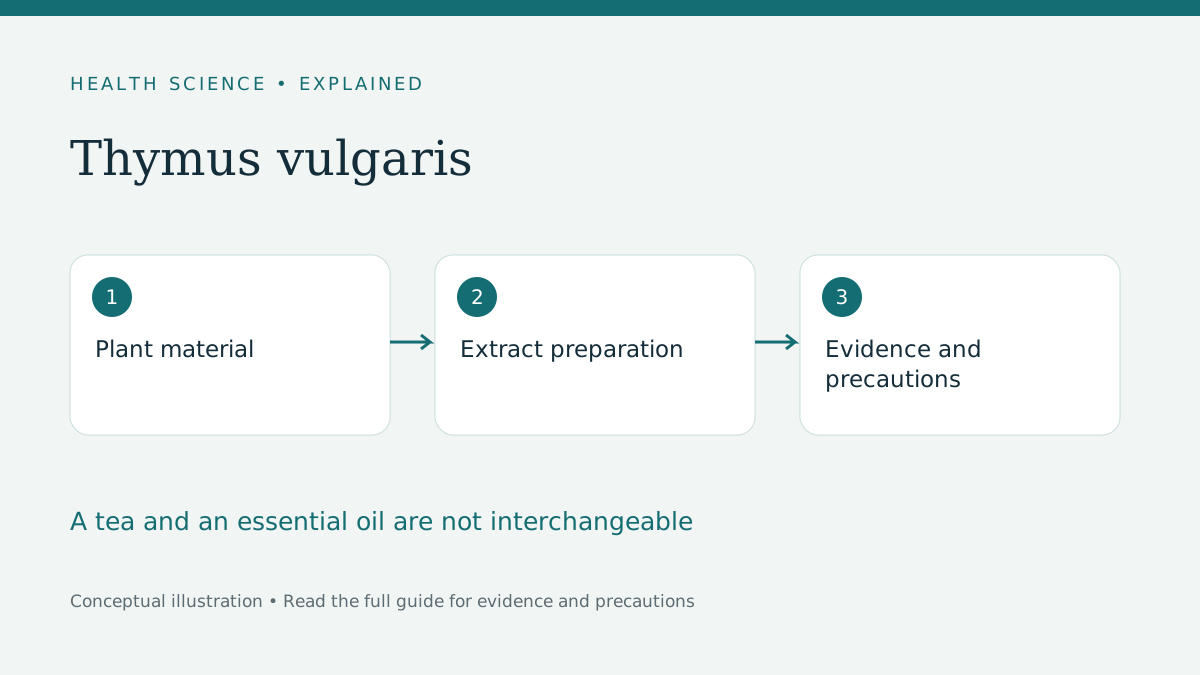
Thyme is familiar enough to seem straightforward: a fragrant kitchen herb, a traditional tea, an ingredient in cough mixtures. Yet a label saying thyme does not describe one uniform intervention. The plant species, part used, extraction method, concentration and route of administration all matter. A teaspoon of culinary leaves and a concentrated essential oil cannot be treated as equivalent simply because both originate from the same plant.
For readers considering thyme for a cough, the useful question is therefore narrower than whether thyme is good for the lungs. It is whether a particular preparation has an appropriate use, what evidence supports that use, and whether the symptoms first require medical assessment. That sequence prevents familiarity with the herb from replacing an assessment of the actual product.
What traditional use means
The European Medicines Agency describes certain preparations of Thymus vulgaris and Thymus zygis herb as traditional herbal medicines for productive cough associated with a cold. Traditional use is a specific evidential category: longstanding use makes the proposed application plausible, but it is not the same as strong clinical proof from multiple large trials.
This distinction changes how a claim should be read. A preparation may have a recognised traditional role in short-term symptom management without being shown to eradicate infection, prevent pneumonia or repair damaged lung tissue. A medicinal tradition can be worth studying while its limits remain visible. The EMA assessment does not turn every thyme-containing supplement into a proven respiratory treatment.
Three preparations, three different questions
A tea is an infusion of plant material in water. An extract is produced through a defined manufacturing process, often using water, ethanol or a combination, and may have a specified drug-to-extract ratio. Essential oil is a concentrated volatile fraction. The resulting mixtures contain different proportions of compounds, so equal liquid volumes do not imply equal exposure.
EMA assesses thyme oil separately from thyme herb. That separation is instructive for consumers: evidence and directions belong to the specified preparation. Some regulated oral medicinal formulations contain thyme oil, but this does not make an aromatherapy bottle suitable for swallowing. Never improvise an oral dose of an essential oil or add it to a nebuliser. A route on one product's instructions cannot be transferred to another.
The word natural cannot answer these manufacturing questions. When a bottle states only a plant name without identifying the preparation or appropriate directions, the missing information matters more than a reassuring image of leaves on the packaging.
How to assess a multi-ingredient formula
A cough mixture may combine thyme with several other plants or with ingredients such as propolis. Its overall suitability depends on the entire formula, including allergens, alcohol content, age restrictions and recommended duration. A study of one ingredient does not establish the effectiveness of the finished combination. Equally, a study of a combination cannot reveal exactly how much of its effect came from thyme.
Make a short comparison before purchase: the botanical identity, preparation type, amount per recommended serving, full ingredient list and precautions. Bring the label to a pharmacist if medicines are already being taken. This is particularly useful when several household products contain overlapping ingredients. Two differently branded cough products may add up to an unintended duplicate exposure.
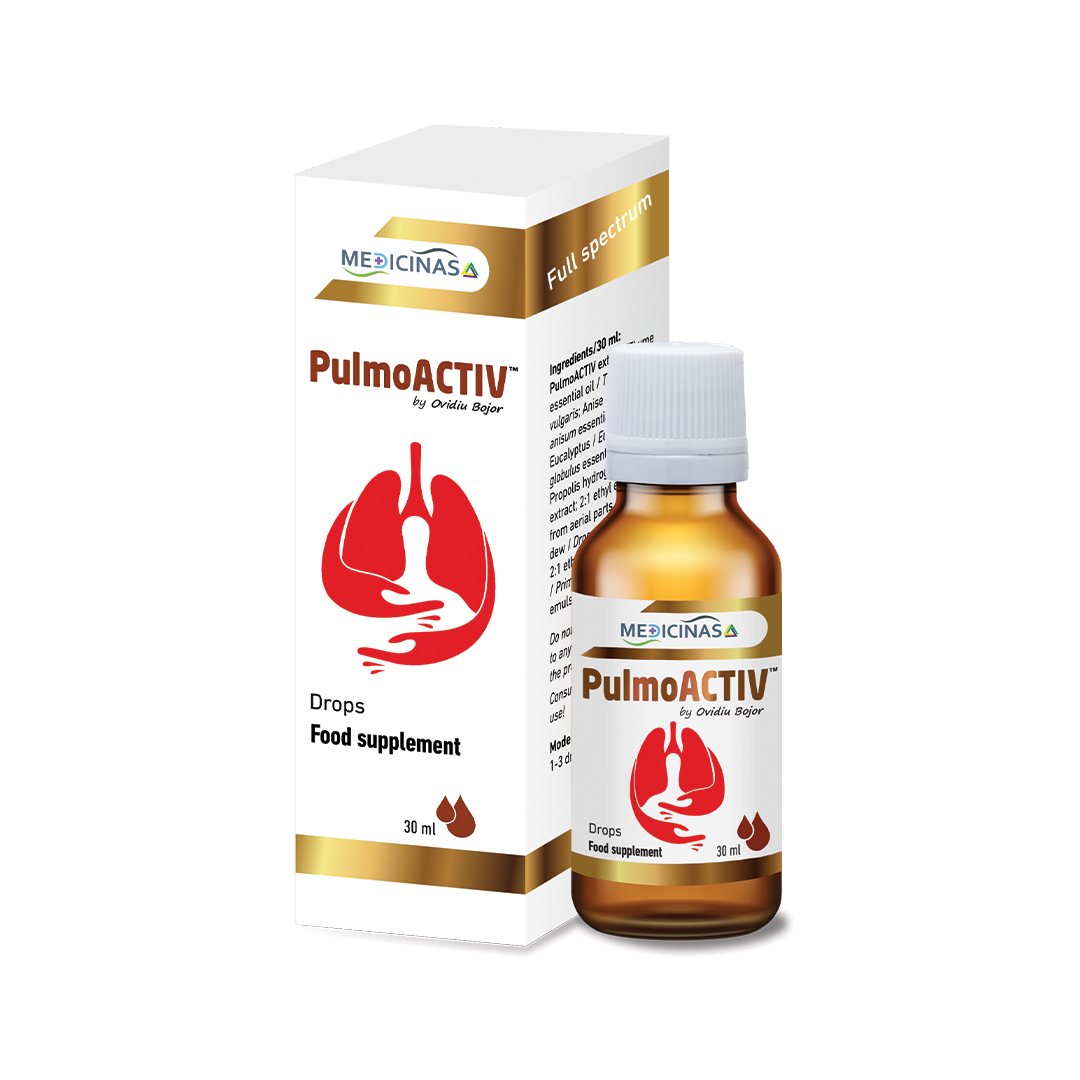
For an example of how to read a formula, see the journal's PulmoActiv ingredient guide. Reading that guide is an information step, not evidence that a product is appropriate for a particular cough.
When a cough needs a different response
A cough is a symptom rather than a diagnosis. The NHS advises assessment when it persists beyond three weeks, with more urgent help for breathing difficulty, coughing blood, chest pain or a rapidly worsening illness. A cough can accompany reflux, allergy or asthma as well as a respiratory infection. Selecting a herb without considering the cause can delay the intervention that actually matters.
While recovering from an uncomplicated illness, rest, suitable fluids and avoiding smoke can be reasonable comfort measures. Feeling temporarily soothed after a warm drink does not demonstrate that the underlying infection has been treated. Track the direction of change: improving sleep and gradually less coughing are different from a new fever or increasing breathlessness.
A realistic place for thyme
The strongest consumer decision is neither automatic enthusiasm nor automatic dismissal. Keep food use, traditional medicinal use and disease-treatment claims separate. Use only preparations with clear directions that fit the person and the situation; seek professional advice for children, pregnancy, breastfeeding or complex medical histories.
If a product is tried, define the goal as a specific symptom outcome and set a point for reassessment. Do not keep adding products because the first did not help. The practical value of botanical literacy is knowing when a familiar plant offers a reasonable question to discuss, and when it is simply the wrong tool for the problem.
Continue reading
Psyllium Husk: How a Gel-Forming Fibre Changes Stool Consistency · Ginger and Nausea: What the Evidence Can and Cannot Tell You
Product context: the Medicinas Europe listing for PulmoActiv includes thyme essential oil alongside other ingredients. The retailer warns against use in pregnancy or breastfeeding and in people allergic to its components; internal use below age 14 requires specialist advice. Evidence about thyme preparations does not establish the effectiveness of this combination. Current product information (checked 27 October 2026).
About the author
Medicinas Editorial Team prepares educational articles by comparing clinical guidance and research with practical questions readers bring to everyday health decisions.
Medical note
This article provides general education, not a diagnosis or an individual treatment plan. Discuss persistent symptoms, medicines and supplement choices with an appropriately qualified clinician or pharmacist.