
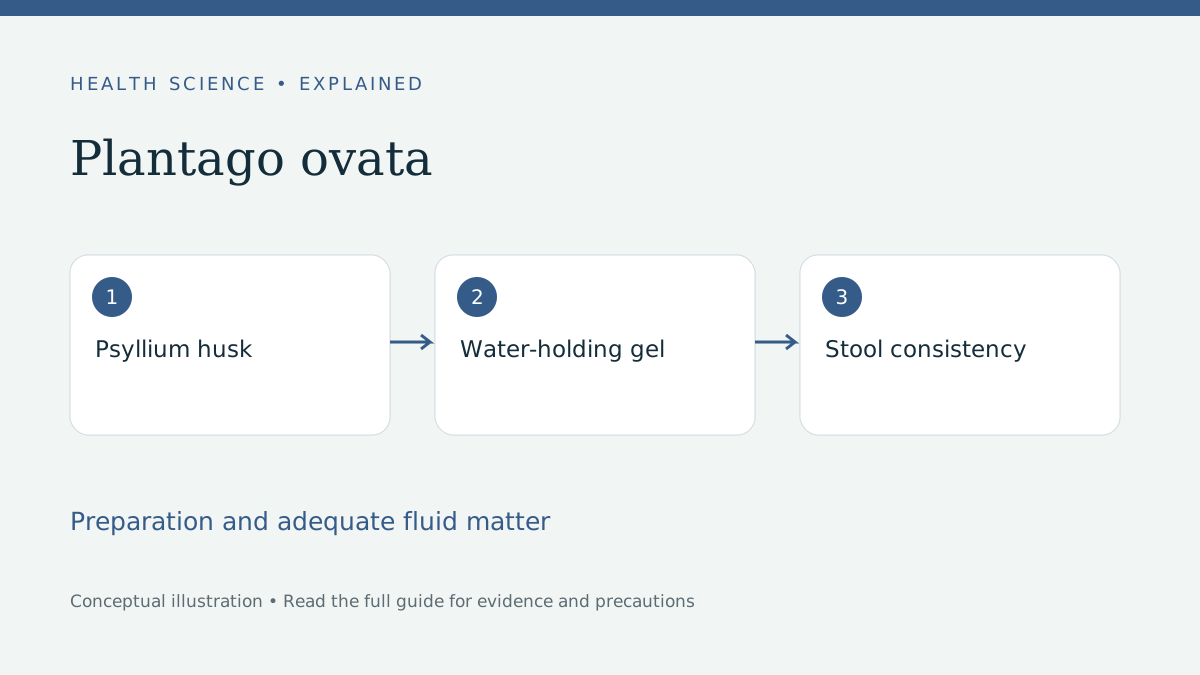
Psyllium is often sold as a simple fibre powder, but its usefulness depends on a physical property: the husk absorbs water and forms a gel. It is commonly called ispaghula husk and is derived from Plantago ovata. In medicinal preparations it is used as a bulk-forming laxative. The purpose is to change the water-holding characteristics and bulk of stool, rather than to force a rapid bowel movement.
That mechanism makes expectations important. Someone wanting an immediate bowel evacuation may be disappointed, while someone trying to establish a more comfortable pattern may find a gradual intervention more appropriate. Fibre choice should follow the problem being addressed, not a general belief that more fibre is always better.
Where psyllium fits
The NHS describes ispaghula husk medicines as treatments for constipation. Product information also describes selected uses in bowel-function management. These are not promises that any unexplained digestive symptom can be treated with a powder. Abdominal pain, stool frequency, stool form and difficulty passing stool describe different aspects of bowel function and may require different responses.
A practical starting record includes when symptoms began, whether the change is new, current medicines and whether there is bleeding or weight loss. Record the difficulty that matters most: hard stool, straining, incomplete emptying or infrequent bowel movements. The objective is a more comfortable and predictable pattern, not achieving an arbitrary number of toilet visits.
Water is part of the preparation
Directions for Fybogel, one ispaghula preparation, instruct mixing the granules with cold water and drinking promptly. The NHS specifies at least 150 ml for that product. Other formulations may give different instructions, so read the actual packet rather than copying a recipe from another brand. Do not swallow loose dry powder or treat a thickened mixture as a challenge to finish quickly.
The same gel-forming property that makes psyllium useful explains why swallowing difficulties and inadequate liquid are important safety issues. People with fluid restrictions should ask their clinician how a fibre preparation fits within those restrictions. A general instruction to drink more is not an individual fluid prescription.
Keep the preparation process simple and repeatable. Use the correct measuring device, the amount of fluid stated on the label and a predictable time. Store the powder safely and avoid raising dust while measuring it. Instructions are part of the treatment, not an optional detail underneath the marketing copy.
Allow time and watch tolerance
Bulk-forming laxatives commonly take a few days to show their full effect. Bloating or wind may occur after a sudden fibre increase. This does not necessarily mean the preparation is unsuitable, but persistent discomfort deserves review. Do not keep escalating the dose in response to one disappointing day, and do not ignore severe pain on the assumption that it is normal adjustment.
Food still matters. A supplement does not replace a varied diet, regular opportunities to use the toilet or attention to the medicines that may contribute to constipation. It is also useful to avoid changing several things at once. If breakfast, fluid intake, three supplements and a laxative all change on Monday, the reason for improvement or worsening becomes difficult to identify.
Medicines and unsuitable situations
The NHS advises separating Fybogel from other medicines by at least 30 minutes, but particular medicines may require different arrangements. A pharmacist can check the complete regimen. Use the instructions for both products, and do not assume that spacing alone eliminates every potential interaction.
Psyllium is unsuitable for some people, including those with swallowing problems or possible bowel obstruction. Abdominal pain with nausea or vomiting, an unexplained persistent bowel change or blood in the stool should be assessed rather than concealed with escalating fibre intake. Children require age-appropriate advice, and a child under six should receive Fybogel only when prescribed.
Rare allergic reactions can occur. Stop and seek advice for suspected allergy; swelling of the mouth or throat, breathing difficulty or collapse requires emergency care. This is different from ordinary mild wind. Describing the symptom precisely helps prevent both unnecessary alarm and dangerous delay.
What success should look like
A useful review compares the original difficulty with the current experience: is stool easier to pass, is straining reduced, and is the routine tolerable? A product that produces extra bloating without improving the problem is not automatically successful because it adds fibre. Persistent symptoms may require examination, a different treatment or investigation of another cause.
The broader lesson is preparation-specific thinking. Psyllium is a defined material with a practical use and clear limits. It is not a universal cleanse, and it does not need a detoxification story to justify a sensible role in bowel care. Readers exploring other plant preparations can compare this approach with the journal's guide to thyme preparation types.
Continue reading
Thyme for Cough: Why Tea, Extracts and Essential Oil Are Different · Ginger and Nausea: What the Evidence Can and Cannot Tell You
About the author
Medicinas Editorial Team prepares educational articles by comparing clinical guidance and research with practical questions readers bring to everyday health decisions.
Medical note
This article provides general education, not a diagnosis or an individual treatment plan. Discuss persistent symptoms, medicines and supplement choices with an appropriately qualified clinician or pharmacist.