
A familiar flavour can hide a different exposure
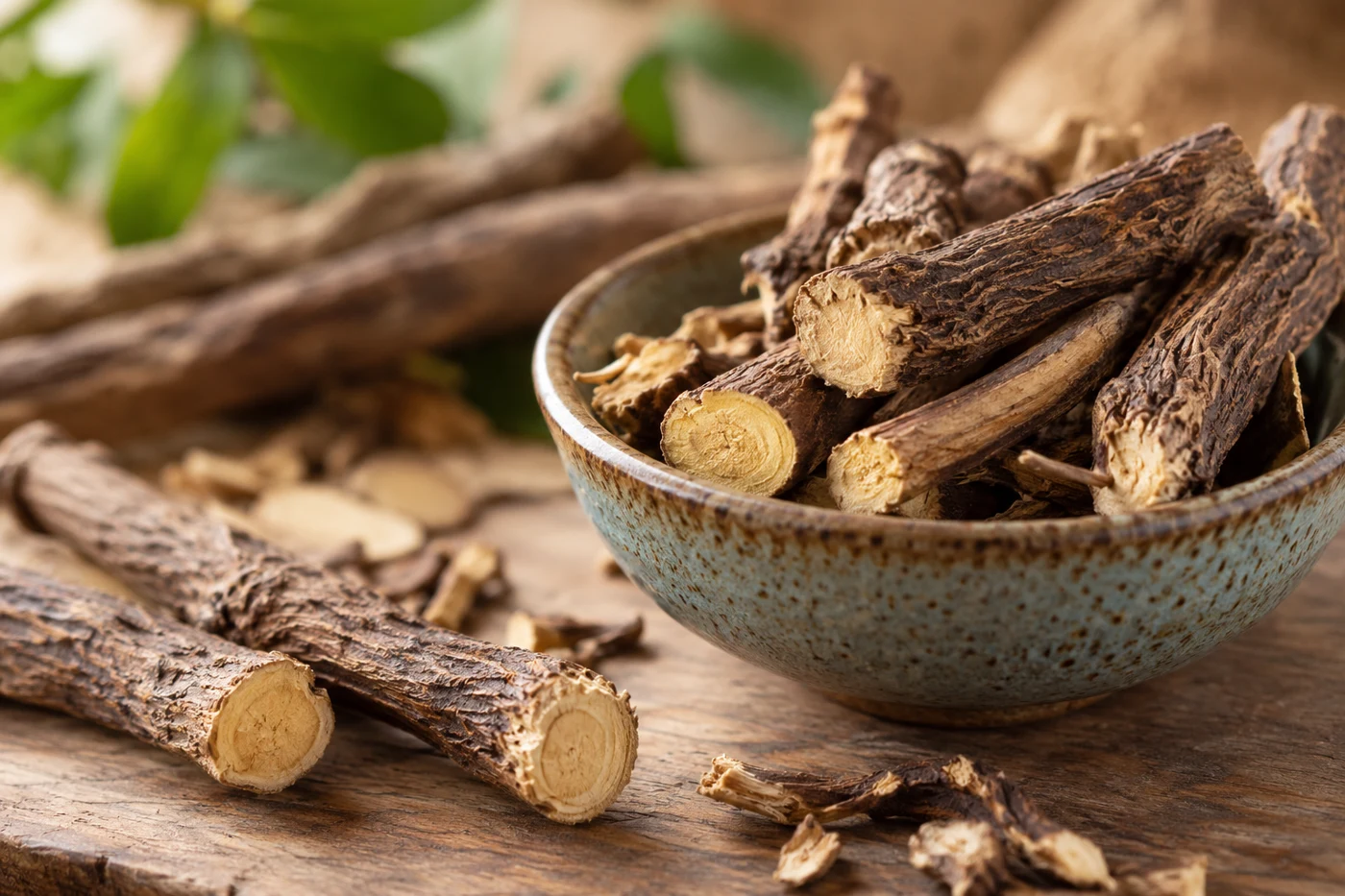
Liquorice is often encountered before it is considered a medicinal plant. Someone may recognise a sweet, distinctive taste in a confectionery product, then meet the same plant name in a digestive blend, a throat preparation or an herbal tea. Those experiences can make the ingredient feel ordinary. The important question, however, is not whether the name is familiar. It is what preparation is being consumed, how often, and alongside which medicines and health conditions.
This is an especially useful example of why an ingredient guide should examine adverse effects with the same care it gives proposed benefits. Glycyrrhiza glabra and related liquorice species contain glycyrrhizin, a constituent relevant to safety. A pleasant taste does not tell a consumer how much of that constituent is present. Nor does a smaller capsule necessarily represent a smaller exposure than a larger serving of another product. The label, formulation and pattern of use all matter.
Evidence: a measurable effect is more informative than a reassuring reputation
A randomized crossover study reported in the American Journal of Clinical Nutrition examined a daily liquorice exposure providing 100 milligrams of glycyrrhizic acid in 28 healthy volunteers. Participants underwent two-week periods of liquorice and control intake. Home systolic blood pressure increased during the liquorice period, while renin and aldosterone were suppressed. The study is important because it measured a defined constituent exposure and compared conditions within the same participants; it does not establish a dose suitable for personal use.
The number of participants was small and the exposure period short. Its practical contribution is therefore a warning against assuming that apparently modest intake is physiologically irrelevant, rather than a prediction of what will happen to every consumer. An earlier systematic review also connected continuing glycyrrhizic-acid exposure with higher blood pressure and lower potassium. Neither paper provides a reason to experiment with a personally selected threshold. A safety discussion should consider the person's whole situation, not only a number taken from a study.
Why blood pressure and potassium belong in the same conversation
NCCIH identifies potentially serious adverse effects from glycyrrhizin, including abnormal heart rhythms, and highlights vulnerability in people with hypertension and heart or kidney conditions. It also notes that even relatively small exposures have been associated with serious effects in susceptible people. These observations change the meaning of an ingredient review: the issue is not simply whether a product produces stomach discomfort that can be tolerated.
A useful consultation question is whether an ingredient could complicate an existing treatment objective. Someone may be working carefully to obtain meaningful home blood-pressure readings while taking several medicines and drinking an herbal blend every evening. Omitting that blend from the medication history leaves the clinician with an incomplete account. The concern is not that every unexpected reading is caused by liquorice; it is that an avoidable exposure should not disappear from consideration because the patient regards it as food.
Preparation changes the question
The term deglycyrrhizinated liquorice refers to preparations intended to have glycyrrhizin removed. NCCIH discusses such oral preparations separately from ordinary liquorice root. This distinction should prompt a closer look at the actual product, not a blanket conclusion that anything carrying the letters DGL is appropriate for everyone or effective for any digestive complaint.
When comparing products, separate the botanical name, the plant part, the amount of extract and any quantified constituent information. A proprietary blend can make a comparison difficult if the amount of an individual ingredient is not clear. If a label cannot answer a relevant question, uncertainty should remain visible. It should not be replaced by an assumption that every member of the category shares the same safety profile. The same principle applies when a study is cited for a preparation different from the product being sold.
Practical implications: make the exposure visible before changing the treatment
Bring the packet, a clear photograph of the full label, or an accurate ingredient list to a pharmacist or clinician. Include teas, sweets consumed regularly, powders and combination products. Describe frequency and duration as well as the named amount. A phrase such as an occasional herbal drink can mean very different things to different people; a concrete account is more useful than a reassuring adjective.
Do not respond to a suspected interaction by stopping prescribed blood-pressure medicine, changing a diuretic or adding potassium on your own. Ask for a review of the whole plan. NCCIH reports interactions between liquorice and corticosteroids and advises discussion of herbal products with health professionals. If symptoms such as palpitations, marked weakness or a significant deterioration occur, seek medical assessment rather than trying to correct the presumed mechanism with another supplement. A mechanism described online is not an individual diagnosis.
Traditional use is a starting point for inquiry
Longstanding use can explain why liquorice appears in digestive and respiratory traditions. It does not settle whether a particular modern preparation is beneficial for a particular person. Traditional descriptions, experimental mechanisms, controlled trials and individual clinical decisions occupy different levels of inquiry. Combining them into a single confident sentence can make an article sound complete while removing the distinctions a reader actually needs.
A balanced approach is neither to dismiss the plant because it can cause harm nor to dismiss the harm because the plant has a history of use. Instead, ask a narrower question: what is the intended outcome, what evidence concerns this preparation, and what risk could alter the decision? If the desired outcome itself is vague, such as general cleansing or balance, there may be no practical way to decide whether taking the product has helped.
Limits and unanswered questions
The effects of a precisely measured constituent in a research setting cannot identify the glycyrrhizin exposure from every commercial product. Individual susceptibility and concurrent exposures further complicate prediction. Evidence that an ingredient can affect a measurement does not mean that a consumer can safely use the same pathway as a self-treatment strategy. Mechanistic interest must remain separate from a recommendation.
For everyday decisions, the strongest conclusion is procedural: make the ingredient visible, clarify the preparation, and obtain a review when medicines or relevant conditions are involved. That is a more reliable form of health literacy than memorising a supposedly safe daily amount. It also respects the difference between being informed and attempting to manage a blood-pressure or electrolyte problem without the clinical information required to do so.
Related reading
- Home Blood Pressure Monitoring: Make the Measurement Useful
- St John’s Wort: Why a Medication Review Comes Before the Herb
- Megaliv Ingredients: Understanding a Multi-Herb Formula Before Buying
Author and medical note
Written by Gabriel Nicolaev – CyGuru. This article provides general educational information, not an individual diagnosis or treatment plan. Discuss persistent symptoms, medical conditions and medicine or supplement interactions with a qualified clinician. No independent medical review is claimed.