
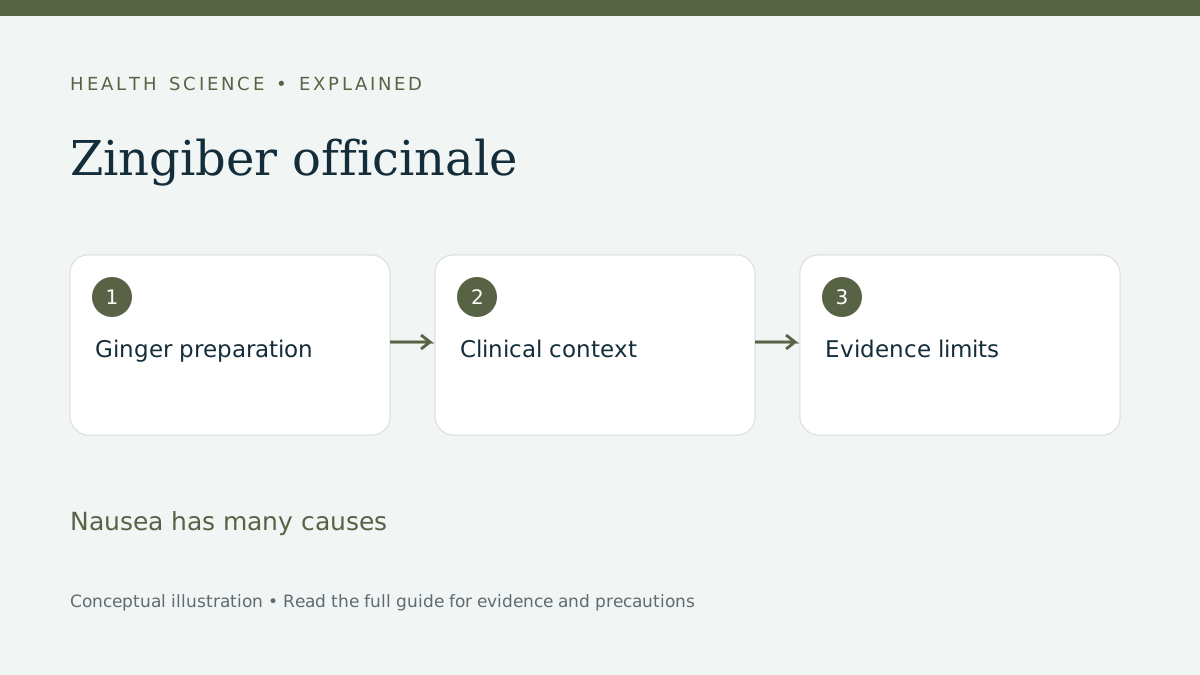
Ginger, Zingiber officinale, is one of the most familiar plants associated with nausea. Familiarity can make the decision seem simple: feel sick, take ginger, wait for relief. In practice, nausea has many causes, and evidence from one setting does not automatically apply to another. Pregnancy-related nausea, motion sickness, medication side effects and vomiting during an acute illness are different clinical questions.
The first task is to identify the situation, not to choose a product. How long has nausea been present? Is vomiting occurring? Can fluids be kept down? Is there abdominal pain, a new medicine or a possibility of pregnancy? Those details determine whether a food-based comfort measure is reasonable or whether assessment is more urgent.
The best-supported setting is a specific one
NCCIH reports that ginger may help nausea and vomiting associated with pregnancy, while evidence for other uses is less consistent or uncertain. Much research has used supplements rather than ordinary foods. It is therefore inaccurate to take a positive result from a trial and attach it to every ginger biscuit, tea or concentrated extract.
NICE antenatal guidance includes ginger as an option for mild-to-moderate pregnancy nausea when a non-pharmacological approach is preferred. That is a choice within care, not a requirement to avoid medicine. Effective anti-sickness treatments are available, and needing them is not a failure of diet or determination.
An important practical distinction is severity. A person who feels queasy but can drink and eat is in a different position from someone who cannot retain fluids or is losing weight. The label morning sickness can understate symptoms that continue throughout the day and substantially disrupt normal life.
Food, drinks and supplements are not interchangeable
A culinary portion of ginger, a sweetened beverage and a capsule can deliver different amounts and different mixtures of compounds. Some drinks contain little ginger despite a strong flavour. A concentrated extract may not resemble the preparation tested in a particular study. Read the ingredient list and amount per serving before interpreting the front-of-pack description.
The UK Committee on Toxicity has specifically considered ginger supplement use during pregnancy. Its review reinforces the need to distinguish customary food consumption from supplement exposure and to recognise uncertainty in product composition. The NHS suggests ginger-containing foods or drinks among self-care options but advises checking with a pharmacist before using supplements in pregnancy.
This does not mean that every food preparation is effective or that every capsule is dangerous. It means that the relevant decision concerns the actual material and the person using it. A familiar ingredient name is not a complete safety assessment.
What a sensible trial looks like
If a clinician or pharmacist considers ginger appropriate, define the outcome before trying it. The meaningful question is whether nausea becomes less disruptive and whether eating and drinking become easier. A strong taste, warmth in the stomach or a marketing claim about circulation is not a measure of effectiveness.
Keep other changes modest enough to interpret. Small, more frequent meals, avoiding smells that reliably provoke nausea and taking fluids in manageable amounts may be more practical than forcing a large meal. The NHS recommends such approaches for pregnancy nausea. A record of triggers and tolerable foods can make a follow-up consultation more useful than a list of supplements already purchased.
Do not use a response to ginger as a diagnostic test. Symptoms can fluctuate spontaneously, and feeling better for an hour does not establish the cause. Equally, lack of benefit does not mean the symptoms are imaginary. It simply means this approach has not provided the desired relief.
Safety and the point to seek help
Ginger can cause heartburn, abdominal discomfort, diarrhoea or irritation of the mouth and throat. Concentrated products warrant a medicine review, particularly when several supplements are being combined. Avoid assuming that a plant with a long culinary history cannot interact with treatment.
Persistent vomiting can cause dehydration. In pregnancy, inability to keep food or fluids down, very dark urine or little urine, dizziness, weakness or weight loss needs prompt clinical advice. Severe abdominal pain, vomiting blood or marked deterioration requires urgent assessment in any setting. These are reasons to change the care plan rather than search for a stronger ginger preparation.
People receiving chemotherapy or recovering from surgery should discuss nausea with their treating team. Antiemetic medicines are selected for the relevant setting; ginger should not displace a prescribed prevention or rescue regimen.
A useful ingredient without a universal promise
Ginger deserves an evidence-based discussion precisely because it is so widely used. Its potential value is more credible when attached to a defined problem, an identified preparation and an honest account of uncertainty. It should not be promoted as a general cure for digestive disease.
For comparison, the journal's psyllium guide explains a very different botanical action. Both illustrate the same principle: select the ingredient after understanding the symptom, and judge it by outcomes that matter rather than by how natural it sounds.
Continue reading
Thyme for Cough: Why Tea, Extracts and Essential Oil Are Different · Psyllium Husk: How a Gel-Forming Fibre Changes Stool Consistency
About the author
Medicinas Editorial Team prepares educational articles by comparing clinical guidance and research with practical questions readers bring to everyday health decisions.
Medical note
This article provides general education, not a diagnosis or an individual treatment plan. Discuss persistent symptoms, medicines and supplement choices with an appropriately qualified clinician or pharmacist.
References
- NCCIH: Ginger
- NICE: Antenatal care recommendations
- NHS: Vomiting and morning sickness
- UK Committee on Toxicity: Ginger supplement use in pregnancy
- ACOG: Nausea and vomiting of pregnancy
Continue exploring: Peppermint Oil for IBS: The Preparation Matters as Much as the Plant.