
The hand is where a symptom is felt, not always where it begins
Pins and needles in a hand can interrupt sleep, make a phone uncomfortable to hold or turn fastening a button into a frustrating task. It is tempting to give the symptom a familiar name immediately. Carpal tunnel syndrome is common, but the hand receives signals through nerves that travel from the neck through the arm. A sensation felt at the fingertips does not, by itself, tell us where a problem is located.
The useful starting point is a map and a timeline. Which fingers are affected? Does numbness come and go or remain constant? Is there pain in the neck, elbow or wrist? Has grip become unreliable? These questions organise the history without turning a diagram of nerve territories into a self-diagnostic test.
What carpal tunnel syndrome describes
Carpal tunnel syndrome involves compression of the median nerve as it passes through a narrow space at the wrist. The nerve contributes sensation to the thumb side of the hand and controls some muscles involved in thumb function. Symptoms often include tingling, numbness or pain, with nighttime disturbance being a common feature. Weakness or clumsiness can become important when function is affected.
Anatomical patterns are helpful clues, not absolute rules that every person reports perfectly. Someone may say the whole hand feels strange even when the examination suggests a more particular distribution. The task is to connect the account, examination and functional changes. Repeatedly provoking tingling by tapping or bending the wrist at home does not add the same information as a structured clinical assessment.
Evidence: diagnosis is a combined judgment
NHS guidance explains that a clinician can often identify carpal tunnel syndrome from the history and examination, with additional tests when the diagnosis is uncertain. Nerve-conduction testing can provide information about nerve function. Imaging may be useful in selected situations, but a scan is not automatically the first or most useful investigation for every numb hand.
AAOS describes how examination can include sensation, thumb strength and signs of muscle wasting, with testing used to clarify severity or other nerve involvement. This distinction matters: a test is most useful when it answers a specific question. Is the pattern consistent with compression at the wrist, how significantly is function affected, or could another location better explain the symptoms?
Why the neck and elbow remain part of the conversation
Irritation of a nerve root in the neck can cause symptoms extending into the arm or hand. Compression of other nerves, including around the elbow, can also create a different distribution of tingling. Existing diabetes or a broader neuropathy may further complicate the picture. These are reasons for careful assessment, not reasons to assume that a more serious explanation is always present.
The practical implication is to avoid using one symptom as proof of one structure. Neck pain, hand symptoms and a finding on imaging may coexist without each finding explaining everything. A clinician considers their relationship, including whether the pattern of weakness or altered sensation fits. Treatment should follow that reasoning rather than whichever label appeared first during a web search.
Practical implications: record function, not only discomfort
Before an appointment, write down the activities that expose the problem: waking at night, holding a steering wheel, using vibrating tools, carrying bags or repeatedly gripping at work. Note which adjustments help and whether relief is temporary. Include any dropping of objects, difficulty with fine movements or persistent loss of feeling. This turns a vague complaint into information that can guide examination.
A brief daily record is usually more useful than testing the hand dozens of times. Constant checking can make comparisons difficult because each test changes attention and sometimes symptoms. Choose a few ordinary outcomes instead: whether sleep was interrupted, whether a familiar task could be completed and whether the overall pattern is progressing. Bring a list of health conditions and medicines as part of the same conversation.
Practical goals should reflect the person's actual use of the hand. A musician, a manual worker and someone who mainly struggles with clothing fasteners may notice different limitations even when they receive the same diagnostic label. Writing down two or three priority activities can help make a treatment discussion specific. It also creates a fairer comparison over time than asking only whether the hand is better, because improvement in sleep and improvement in fine control may follow different courses.
Match the intervention to its purpose
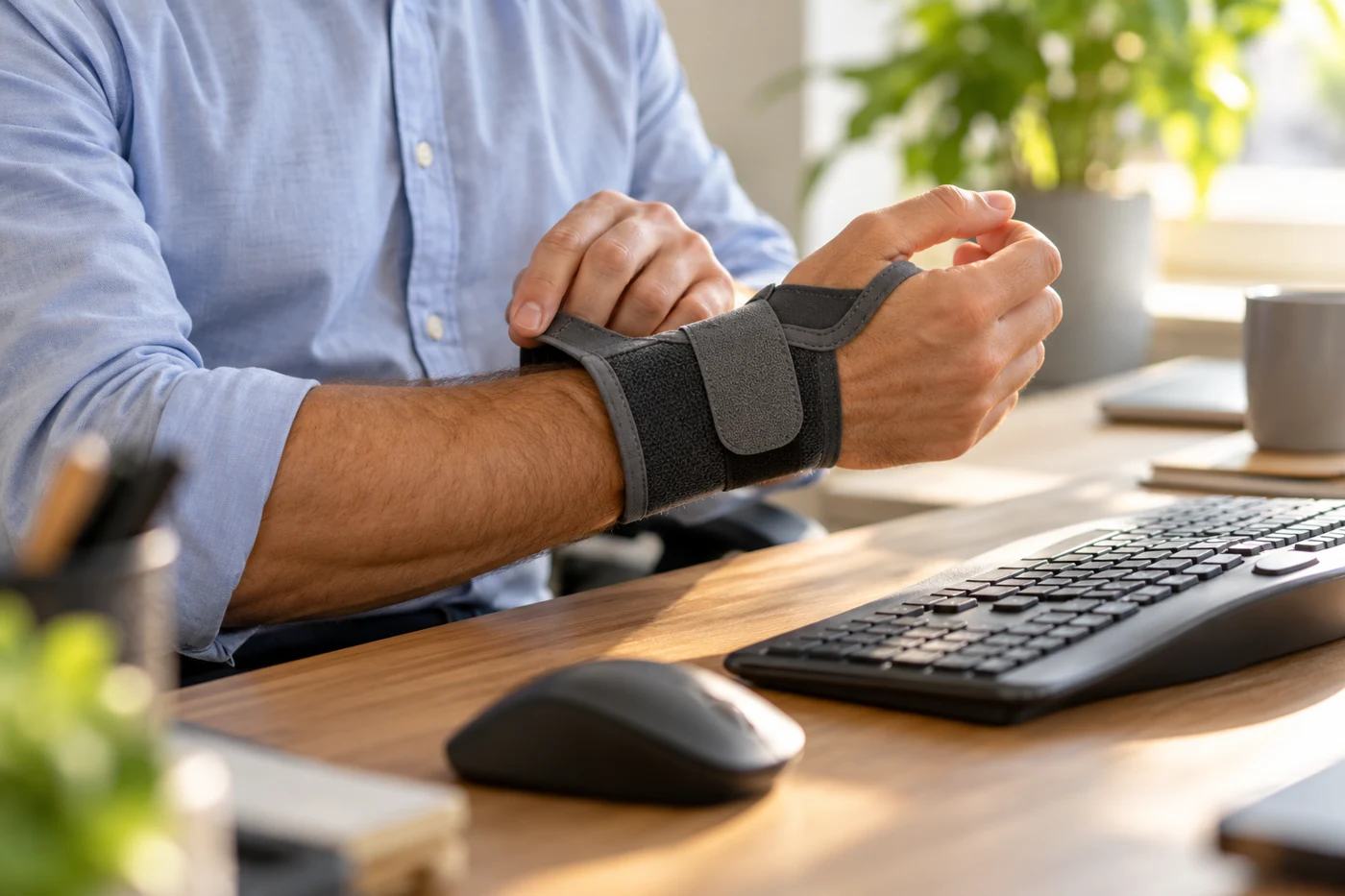
For appropriate cases, a neutral-position wrist splint can be part of conservative management, particularly at night. Changes to aggravating tasks may also be discussed. A splint is not simply a tighter support: comfort, fit and whether the wrist is held in a suitable position matter. Ask for advice if a device causes increased discomfort, pressure or new symptoms.
Other options can include injection or surgery depending on the diagnosis, severity and response to earlier care. The important distinction is between easing pain and addressing ongoing nerve compression. A medicine that reduces discomfort does not necessarily resolve the cause. Nor does a supplement marketed for nerve support demonstrate that it can remove pressure from a narrow anatomical passage.
When waiting needs reconsideration
Worsening symptoms, persistent numbness, loss of hand function or visible muscle changes should prompt timely assessment rather than indefinite experimentation. Sudden weakness or numbness affecting an arm, particularly with facial changes, speech difficulty or other acute neurological symptoms, belongs to an emergency pathway rather than a routine carpal tunnel discussion.
A sensible follow-up plan includes what improvement would look like and what would trigger a change in approach. For example, sleeping better may be encouraging, but continuing loss of thumb strength would still matter. The aim is not to make a person fearful of every sensation. It is to ensure that a comforting explanation does not obscure a clear progression in function.
Limits and unanswered questions
The best choice for an individual cannot be inferred from the name carpal tunnel alone. Severity, duration, other conditions, occupational demands and the person's priorities all affect decisions. Different outcomes also matter: symptom relief, sensation, fine hand function and work capability are related but not identical. A treatment may improve one earlier than another.
There is also a limit to how precisely a person can localise a nerve problem from symptoms without examination. Useful education explains the possibilities while leaving room for the clinical findings. The deeper principle is straightforward: map the pattern, assess the function and review the response. A hand is part of a connected nervous system, but that connection is a reason to be more specific, not a reason to give every nerve symptom the same remedy.
Related reading
- Peripheral Neuropathy: Why Tingling Feet Need a Cause, Not a Guess
- Pain Sensitisation: When the Nervous System Changes the Volume
- Type 2 Diabetes Remission: A Clinical Milestone, Not a Permanent Cure
Author and medical note
Written by Gabriel Nicolaev – CyGuru. This article provides general educational information, not an individual diagnosis or treatment plan. Discuss persistent symptoms, medical conditions and medicine or supplement interactions with a qualified clinician. No independent medical review is claimed.