
A symptom is the starting point
Pins and needles after sitting awkwardly are familiar. Persistent burning feet, reduced sensation or progressive imbalance deserve a different response. Peripheral neuropathy refers to damage involving nerves outside the brain and spinal cord. It is a description of a problem, not a single cause, and treatment depends on finding what is driving it.
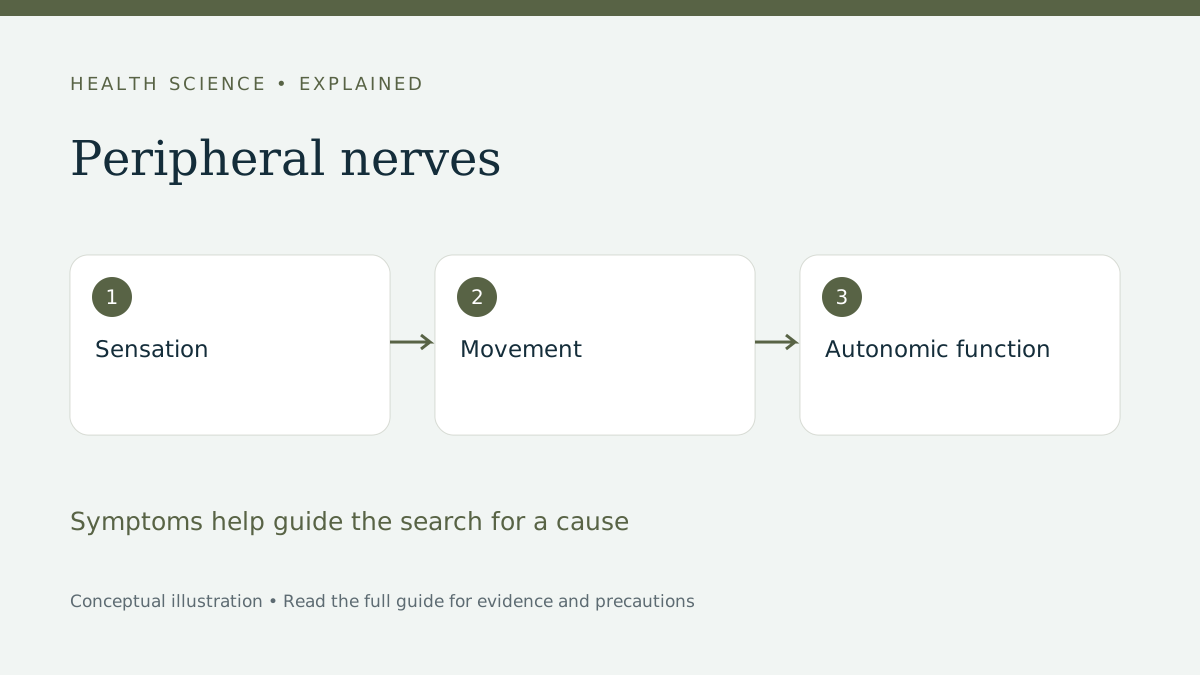
The affected nerve type helps explain the experience. Sensory nerves carry information such as touch and temperature; motor nerves support movement; autonomic nerves participate in functions such as blood-pressure control. A person can therefore have pain, numbness, weakness or symptoms that appear unrelated at first. The absence of severe pain does not mean the nerves are functioning normally.
Patterns that help guide assessment
Describe where symptoms began and whether they are symmetrical. Symptoms in both feet that gradually spread differ from a single patch of numbness after an injury. Record whether there is weakness, difficulty fastening buttons, altered balance or unnoticed skin injury. The timeline matters: slowly evolving symptoms and rapidly worsening weakness require different levels of urgency.
Seek prompt assessment for persistent symptoms. Sudden one-sided weakness, facial changes or speech difficulty requires emergency care. Rapidly progressing weakness, difficulty breathing or swallowing, or major new problems with walking also require urgent evaluation. A hot, swollen or infected-looking foot, particularly with diabetes or reduced sensation, should not be left to routine self-care.
Why a cause-focused review matters
Diabetes is a common cause, but it is not the only one. Vitamin B12 deficiency, alcohol exposure, certain medicines, injuries and other medical conditions may contribute. Some cases remain unexplained after investigation. A diagnosis of diabetes should not automatically end the search if the pattern is unusual; equally, finding one mildly abnormal result does not necessarily explain every symptom.
Bring a complete list of prescriptions, over-the-counter medicines and supplements, including doses. This is especially important for high-dose products promoted for nerve health. More is not automatically better, and an apparently helpful label does not establish safety. Do not stop a prescription independently: the clinician needs to balance its benefits against possible harms and choose an alternative when appropriate.
What examination and tests can contribute
A clinical examination may assess strength, reflexes and sensation. Blood tests can investigate causes such as diabetes or B12 deficiency. Some people need nerve-conduction testing, electromyography or specialist assessment. Each test addresses a particular question; there is no universal panel that explains every pattern of tingling.
Ask what the proposed test could change. For example, identifying a deficiency may lead to replacement treatment and investigation of why it developed. Evidence of nerve compression may lead to a different pathway. If testing is reassuring but symptoms continue, agree on a follow-up interval and the changes that should prompt earlier review. Persistent symptoms should not be dismissed simply because the first set of tests was normal.
Treatment has more than one goal
Care may aim to treat the cause, reduce symptoms and prevent secondary damage. These goals should be discussed separately. Pain relief does not necessarily mean damaged nerves have recovered. Conversely, a treatment that limits progression may not immediately remove every unpleasant sensation. Understanding the intended outcome makes it easier to judge progress realistically.
Medicines used for neuropathic pain differ from ordinary painkillers and may need careful adjustment. Physiotherapy or occupational support can help with balance, strength and daily tasks where appropriate. Report troublesome sleepiness, dizziness or other adverse effects rather than silently abandoning treatment. A useful follow-up conversation includes walking confidence, sleep and everyday function, not only a numerical pain score.
Protecting feet with reduced sensation
Reduced sensation can allow an injury to go unnoticed. Check feet regularly, including soles and spaces between toes, and ask for help if you cannot inspect them safely. Footwear should protect without rubbing. Avoid testing bath water with a numb foot or applying intense direct heat, because pain may no longer provide a reliable warning. Obtain advice about wounds, blisters or changes in skin colour.
Do not cut a callus aggressively or experiment with corrosive corn treatments when sensation or circulation is impaired. Professional foot care is particularly important in diabetes. At home, good lighting, clear walking routes and appropriate footwear can reduce avoidable falls. These practical measures address consequences of nerve dysfunction while investigation and treatment continue.
Evaluating nerve-support products
No supplement can be assumed to repair every form of neuropathy. Correcting a documented nutritional deficiency is a specific medical intervention; buying a broad formula because the feet tingle is a different decision. Product selection should follow assessment, with attention to dose, interactions and the possibility of overlapping ingredients across several bottles.
The most useful first action is to document the pattern and arrange evaluation. Bring examples of what has changed: walking in the dark, feeling the temperature of water, or detecting a shoe rubbing. Those observations connect the symptom to function. For related topics, see the Brain, Focus & Stress collection and our guide to dizziness on standing.
Continue reading
Sleep Apnea and Concentration: When Brain Fog Begins at Night · Migraine Aura: Recognising the Pattern Without Missing an Emergency
About the author
Medicinas Editorial Team prepares educational articles that distinguish established clinical knowledge from emerging hypotheses.
Medical note
This article provides general information, not an individual diagnosis or treatment plan. Discuss persistent or changing symptoms with a qualified healthcare professional. Seek urgent care for the warning signs described above.