
Start with the experience rather than the label
The word dizziness can describe several different sensations: the room spinning, feeling unsteady, or a brief sense that you may faint. When symptoms appear after standing, a change in blood pressure is one possible explanation. Orthostatic, or postural, hypotension describes a fall in blood pressure associated with becoming upright. It should not be diagnosed from the word dizzy alone.
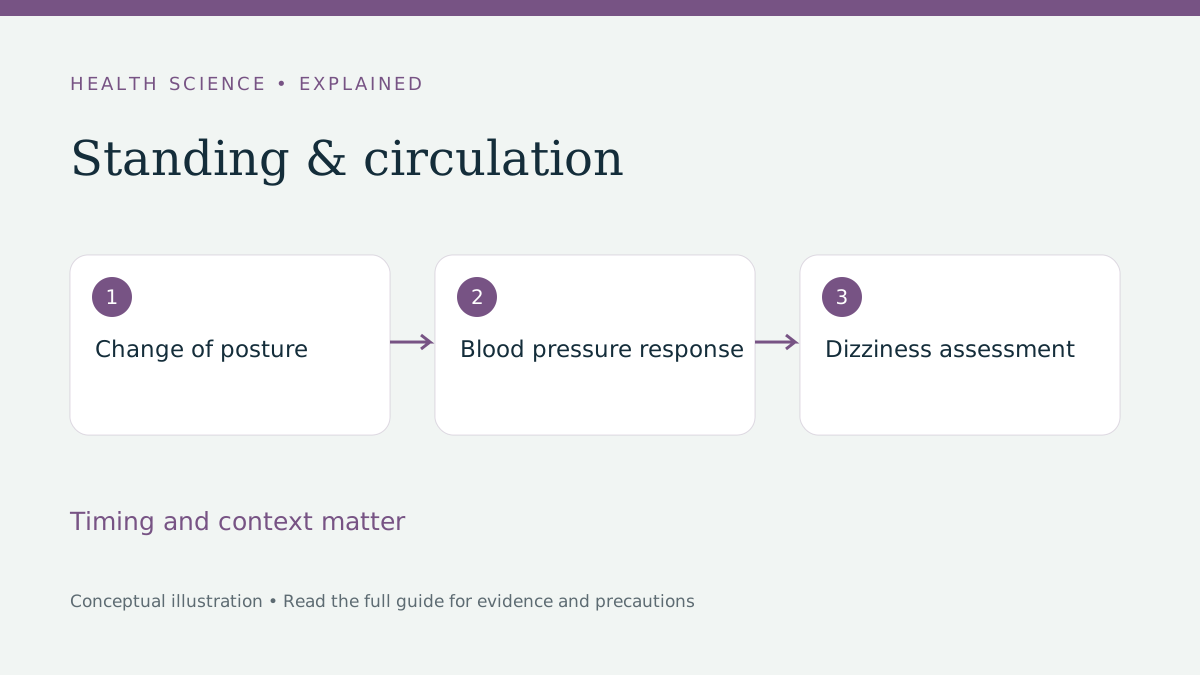
Standing changes the distribution of blood within the body. Normal cardiovascular and nervous-system responses help maintain blood flow to the brain. If those responses are insufficient, lightheadedness or dimming vision can occur. The practical task is to identify the pattern and its cause, rather than assuming the nervous system simply needs strengthening.
The history that makes the problem clearer
Notice whether symptoms occur immediately after getting up, after a meal, during heat exposure or after prolonged standing. Record how long they last and whether sitting or lying down helps. Describe associated palpitations, chest discomfort, breathlessness, weakness or actual loss of consciousness. The distinction between feeling faint and fully passing out matters for assessment.
A short record can include the time, activity, recent meal, fluid intake and medication timing. If a clinician asks for home blood-pressure measurements, follow their method and do not stand alone when there is a risk of falling. A single seated reading cannot establish or exclude a posture-related problem. Measurements need to be interpreted alongside symptoms and the circumstances in which they were taken.
Common contributors and important alternatives
Dehydration, illness, medication effects and changes in blood-pressure regulation can contribute to postural symptoms. Some people have low blood pressure without troublesome symptoms, so the number alone is not the entire problem. Recurrent symptoms warrant review even if a reading taken later appears normal.
Vertigo, heart-rhythm problems and other conditions can also produce dizziness or collapse. Palpitations followed by fainting, symptoms during exertion or new neurological symptoms need particular attention. Do not assume that an episode was harmless because it happened while standing. The clinical history determines which possibilities need investigation and how urgently that should happen.
What to do during an episode
Stop what you are doing and sit or lie down somewhere safe. Do not try to walk through severe lightheadedness or continue on stairs. If possible, alert someone nearby. Avoid driving, climbing or operating equipment while symptoms are present. These actions reduce injury risk while the immediate episode settles; they do not identify the cause.
Emergency assessment is needed for collapse with chest pain, significant breathing difficulty, stroke-like symptoms, serious injury, or failure to recover normally. A person who is unconscious and not breathing normally needs emergency services and immediate first-aid response. Repeated fainting or a first unexplained faint also deserves medical review, even when recovery seems complete.
Everyday measures need individual context
Getting up in stages can help: move from lying to sitting, pause, then stand with support if needed. Avoid sudden position changes and take care in hot environments. Adequate fluid intake may help when dehydration contributes. However, people with heart failure, kidney disease or a prescribed fluid restriction need personalised advice rather than a blanket instruction to drink much more.
Likewise, increasing salt is not a universal solution. It can conflict with management of other conditions. Compression garments or changes in meal pattern may be recommended in selected circumstances, but fit and suitability matter. A plan should explain which measure is being tried, why it is appropriate and how improvement will be assessed.
Medication review is often valuable
Medicines that influence blood pressure or cause sedation can contribute to symptoms in some people. Bring a complete list, including recent dose changes and nonprescription products. The solution may involve timing, dose adjustment or a different medicine, but those choices should be made with the prescriber. Abruptly stopping treatment can create a new problem without resolving the original one.
Ask whether the symptoms suggest a medication effect, volume depletion, an autonomic problem or another cause. If several medicines were started together, a clear timeline becomes especially useful. An investigation is not complete simply because a plausible explanation has been found; the response to an appropriate change and the continuing symptom pattern also matter.
A practical follow-up plan
Agree on a review point and specific reasons to seek earlier help. Useful outcomes include fewer near-falls, being able to get out of bed safely, and improved confidence during normal activity. Keep the record simple enough to maintain. Measuring repeatedly without a plan can generate anxiety and disconnected numbers rather than clinically useful information.
A product promoted for circulation or nervous-system support is not a substitute for finding the cause of faintness. Ingredients may themselves affect blood pressure or interact with medicines. Explore the Heart & Circulation collection and peripheral neuropathy guide for related context. The priority remains safe movement, appropriate assessment and a plan tailored to the actual mechanism.
Continue reading
Sleep Apnea and Concentration: When Brain Fog Begins at Night · Migraine Aura: Recognising the Pattern Without Missing an Emergency
About the author
Medicinas Editorial Team prepares educational articles that distinguish established clinical knowledge from emerging hypotheses.
Medical note
This article provides general information, not an individual diagnosis or treatment plan. Discuss persistent or changing symptoms with a qualified healthcare professional. Seek urgent care for the warning signs described above.