
Aura is a neurological symptom pattern
Migraine aura describes temporary neurological symptoms associated with some migraine attacks. A person may see shimmering edges or zigzag lines, experience a spreading area of tingling, or notice difficulty finding words. Headache may follow, overlap with the aura or be absent. This variability is one reason a familiar label should not be applied casually to a new experience.
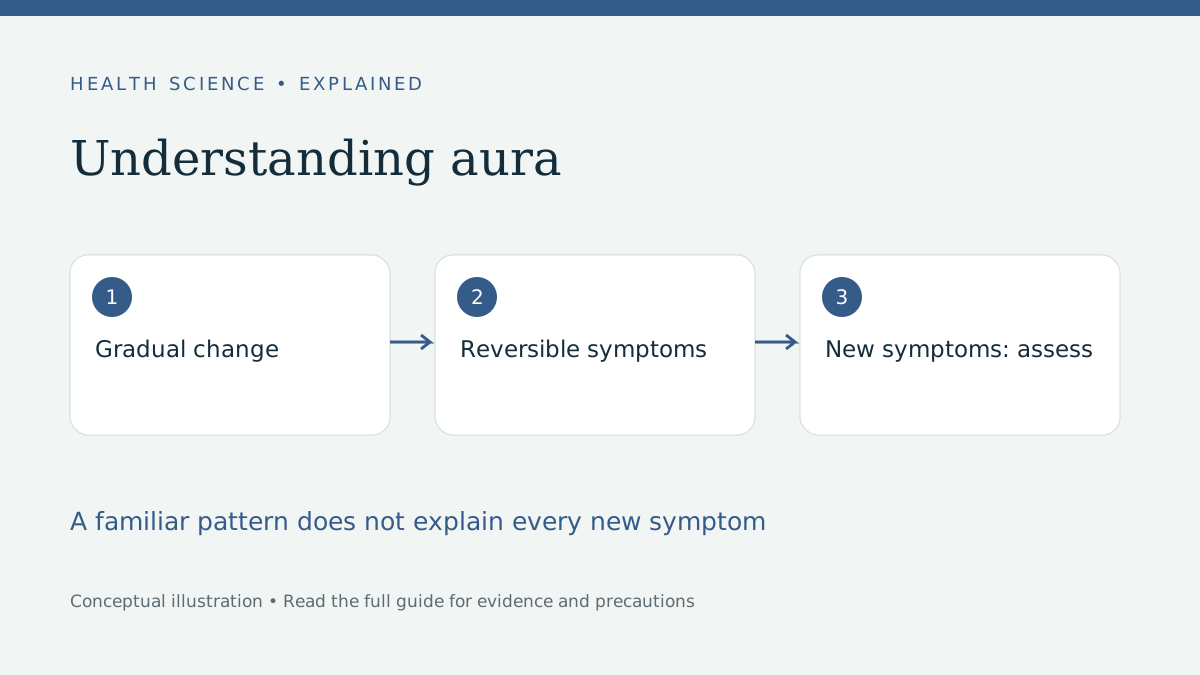
The International Classification of Headache Disorders describes a recognisable pattern involving reversible symptoms that often develop gradually. Clinicians consider the sequence, duration and character of symptoms rather than one isolated feature. Aura is not simply the ordinary tiredness or mood change that can occur before migraine. Nor does every visual disturbance represent aura. Eye conditions and other neurological problems can produce symptoms that deserve their own assessment.
What a typical history can sound like
A patient may describe a small shimmering patch that expands across the visual field over several minutes, followed by a headache. Another may describe tingling that moves from the fingers toward the face. Many typical individual aura symptoms last between five and sixty minutes. These descriptions help clinicians recognise a pattern, but they are not a home checklist for ruling out stroke.
The most informative detail is often how the episode evolved. Did the symptom appear fully formed within a second, or spread gradually? Was it a flashing shape, a missing patch of vision, or both? Did one symptom follow another? Could you speak normally, move both arms and walk steadily? Write the observations down afterward if it is safe to do so. Do not delay urgent assessment to produce a complete diary.
When the safe response is urgent assessment
Sudden weakness, facial drooping, new difficulty speaking, sudden loss of vision or an abrupt extremely severe headache requires emergency assessment. A previous migraine diagnosis does not make a new neurological event harmless. Symptoms that are substantially different from the established pattern, fail to resolve as expected, or begin for the first time need medical attention. New symptoms during pregnancy or after delivery also deserve prompt assessment.
The important distinction is between recognition and certainty. A person with an established care plan may recognise their usual aura, yet an online description cannot certify that a new event is the same process. Do not drive while vision, sensation or speech is affected. If another person is present, ask them to remain nearby and help obtain care when needed.
How the diary becomes clinically useful
A migraine diary works best when it records a few consistent variables: onset time, symptom sequence, duration, headache characteristics, associated nausea or sensitivity to light, medication taken and effect on normal activity. Record headache-free days too. A month of usable observations often communicates more than an elaborate account of the single worst attack.
Avoid deciding that every preceding food or event was a trigger. A demanding day, missed meal, altered sleep and hormonal changes may overlap, making simple cause-and-effect judgments unreliable. Record patterns without immediately removing multiple foods or imposing rigid routines. The diary should make life easier to understand, not create fear of ordinary activities. Bring it to an appointment to discuss whether acute treatment, prevention or further investigation is appropriate.
Treatment depends on the whole migraine burden
Migraine management can include medicines used during attacks and preventive treatment when attacks are frequent or disabling. Selection depends on the diagnosis, other conditions, pregnancy considerations and previous responses. Frequent use of some headache medicines can itself complicate headache management, so the number of treatment days matters. A clinician or pharmacist can explain the limits relevant to the specific medicine.
Regular meals, adequate sleep and a manageable activity routine are useful foundations. They should be presented as support rather than a moral test: someone can follow a sensible routine and still experience migraine. A dark quiet space may help during an attack, but persistent disability warrants a broader plan. Ask what to do if the first treatment fails and which changes should trigger reassessment.
Evidence, uncertainty and product claims
Migraine is a neurological disorder with an active research field. Explanations involving changes in cortical activity are scientific hypotheses and mechanisms studied within medicine; they do not validate commercial claims that a generic frequency device or supplement resets the brain. An ingredient study also does not prove that a combined retail formula prevents aura.
Before buying a product, identify the actual question: is it intended to correct a documented deficiency, support nutrition, or treat migraine? Those are different claims requiring different evidence. Bring all supplements into the medication review. A sound care plan makes room for uncertainty while protecting against missed emergencies. Continue with the journal’s brain and nervous-system collection, and use educational reading to prepare better questions for professional care.
Continue reading
Sleep Apnea and Concentration: When Brain Fog Begins at Night · Peripheral Neuropathy: Why Tingling Feet Need a Cause, Not a Guess
About the author
Medicinas Editorial Team prepares educational articles that distinguish established clinical knowledge from emerging hypotheses.
Medical note
This article provides general information, not an individual diagnosis or treatment plan. Discuss persistent or changing symptoms with a qualified healthcare professional. Seek urgent care for the warning signs described above.
References
- NHS: Migraine
- International Headache Society: Migraine with aura
- The Migraine Trust: Migraine with aura
Continue exploring: Concussion Recovery: Rest, Reassessment and a Gradual Return to Life.