
A common side effect still needs context
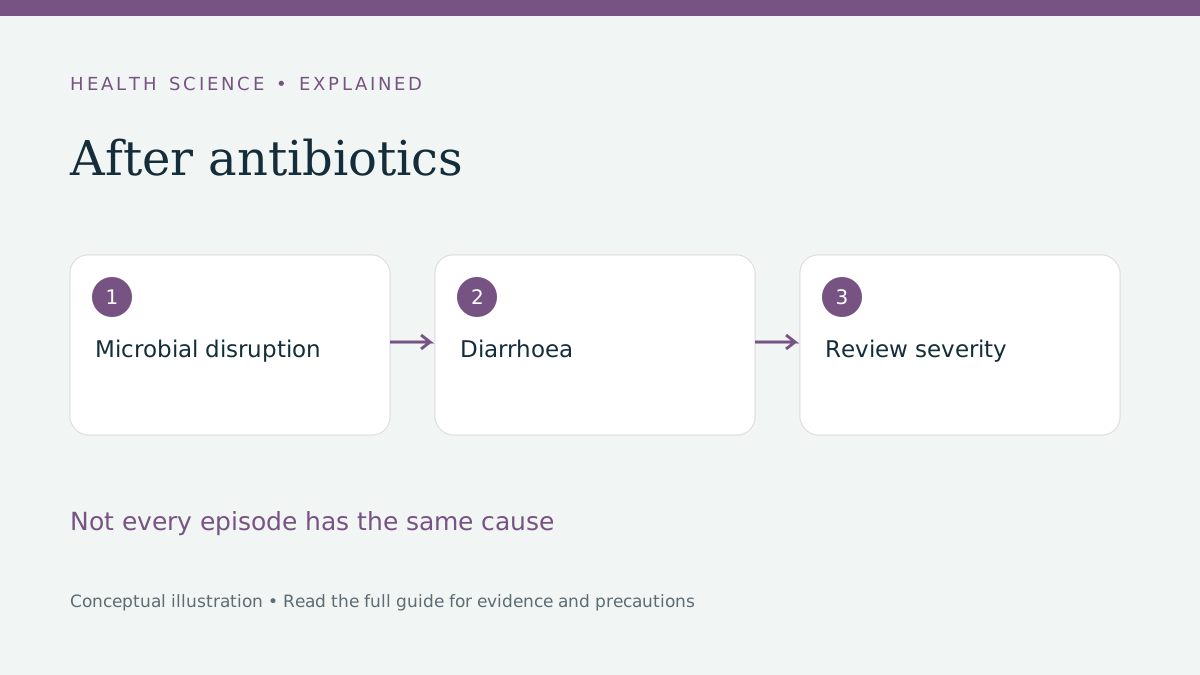
Antibiotics can cause diarrhoea, sometimes through effects on the normal intestinal microbial community. Many episodes are mild, but the label antibiotic-associated does not establish how serious a particular episode is. Timing, frequency, pain, fever and hydration all matter. Diarrhoea can occur during treatment or after the course has finished, so recent antibiotic use remains relevant even when the tablets are no longer being taken.
Do not assume that every loose stool means a dangerous infection. Equally, do not dismiss frequent watery diarrhoea as an expected cleansing reaction. The practical response is to assess severity, maintain hydration where possible and contact the prescribing team when symptoms are significant or persistent. A clear history allows appropriate decisions about testing and treatment.
Why C. difficile deserves attention
Clostridioides difficile, often called C. diff, is a bacterium that can cause inflammation of the colon. Antibiotic exposure is an important risk factor because it can disrupt the normal microbial environment. C. diff infection can be serious and requires medical assessment. Diarrhoea after antibiotics is not automatically C. diff, but the possibility should be considered when the pattern is concerning.
Tell the clinician which antibiotic you took, the dates, the reason it was prescribed and whether you have recently been in hospital or a care setting. Previous C. diff infection and significant medical conditions also matter. Do not rely on stool smell or colour to identify the organism. When indicated, clinicians use appropriate stool testing and the symptom pattern together.
Recognising dehydration and escalation
Repeated watery stools can reduce fluid and electrolyte levels. Notice whether urine output is falling, urine is unusually dark, the mouth feels dry or standing causes marked lightheadedness. Older adults, young children and people with significant underlying illness can deteriorate more quickly. Persistent vomiting can make oral replacement difficult and lower the threshold for seeking help.
Seek urgent medical advice for bloody diarrhoea, severe or worsening abdominal pain, fever with significant illness, confusion, collapse or inability to keep fluids down. Severe weakness or very little urine also warrants prompt attention. If symptoms are substantial after antibiotics, contact a healthcare professional rather than waiting for the course to end and hoping the problem will disappear.
What to do about the antibiotic
Do not independently shorten, extend, restart or substitute antibiotic treatment. Contact the prescriber, who can assess whether the original infection still needs treatment and whether the medicine should change. Keep the packaging or a photograph of the label so there is no uncertainty about the drug and dose. This is more useful than saying only that you took a strong antibiotic.
Also mention other medicines and supplements, especially anything newly introduced. Several agents may affect bowel function, and an accurate timeline helps separate possibilities. Avoid taking leftover antibiotics to treat the diarrhoea. A different antibiotic is sometimes part of treatment for a diagnosed infection, but that is a targeted medical decision, not a reason for self-prescribing.
Fluids, food and symptom medicines
Frequent small amounts of fluid may be easier to tolerate than large drinks. Oral rehydration products can be useful when fluid losses are substantial; use them according to instructions and seek tailored advice when kidney, heart or other conditions affect fluid management. Continue eating as tolerated rather than imposing a prolonged fast. The priority is maintaining intake without forcing foods that worsen nausea.
Ask before using medicines that slow bowel movements when C. diff or another significant infection is suspected. Masking stool frequency does not treat the underlying cause. A pharmacist or clinician can help distinguish situations suitable for simple symptom management from those needing investigation. Record any product taken so subsequent assessment reflects the full picture.
Reducing spread within the household
Handwashing with soap and water is particularly important when C. diff is suspected or confirmed. Clean shared bathroom surfaces and follow the healthcare team's infection-control advice. Handle soiled laundry carefully and avoid sharing towels during active illness. An alcohol hand gel alone should not be treated as equivalent protection against C. diff spores.
Household precautions should be practical and consistent. Focus on hands, toilets, frequently touched surfaces and safe laundry handling rather than indiscriminately applying harsh chemicals around the home. Follow cleaning-product directions and never mix products. If a clinician has diagnosed an infectious cause, ask when it is appropriate to return to work or usual group activities.
Probiotics are a specific decision, not a universal rescue
Research on probiotics depends on the organism, preparation and clinical situation. A positive result for one studied strain cannot be transferred to every product labelled probiotic. People who are seriously ill or immunocompromised should obtain clinical advice before using live-microorganism supplements. A supplement should never delay assessment of severe diarrhoea or suspected C. diff.
After recovery, discuss whether the original antibiotic was necessary and whether future prescriptions need additional consideration. Antibiotics are valuable when appropriately indicated; avoiding unnecessary exposure is different from refusing necessary treatment. For longer-term bowel patterns, see our IBS assessment guide. New diarrhoea after antibiotics deserves its own assessment before being assigned a chronic digestive label.
Continue reading
How IBS Is Diagnosed: Symptoms, Targeted Tests and Warning Signs · Constipation and Fibre: Why Type and Pace Matter
About the author
Medicinas Editorial Team prepares educational articles that distinguish established clinical knowledge from emerging hypotheses.
Medical note
This article provides general information, not an individual diagnosis or treatment plan. Discuss persistent or changing symptoms with a qualified healthcare professional. Seek urgent care for the warning signs described above.