
Constipation is more than a stool count
Constipation can mean hard stools, straining, infrequent bowel movements or a persistent sense of incomplete emptying. Someone may pass stool regularly and still struggle with difficult evacuation. A useful assessment therefore asks about comfort, consistency and effort rather than only the number of visits to the toilet. The aim is comfortable bowel function, not meeting an arbitrary daily target.
Fibre can help many people, but it is not a universal explanation or cure. Medicines, changes in routine, low intake, reduced activity and problems with bowel or pelvic-floor function can contribute. If symptoms are persistent, the question should be why the bowel pattern has changed, not simply how much extra bran can be added.
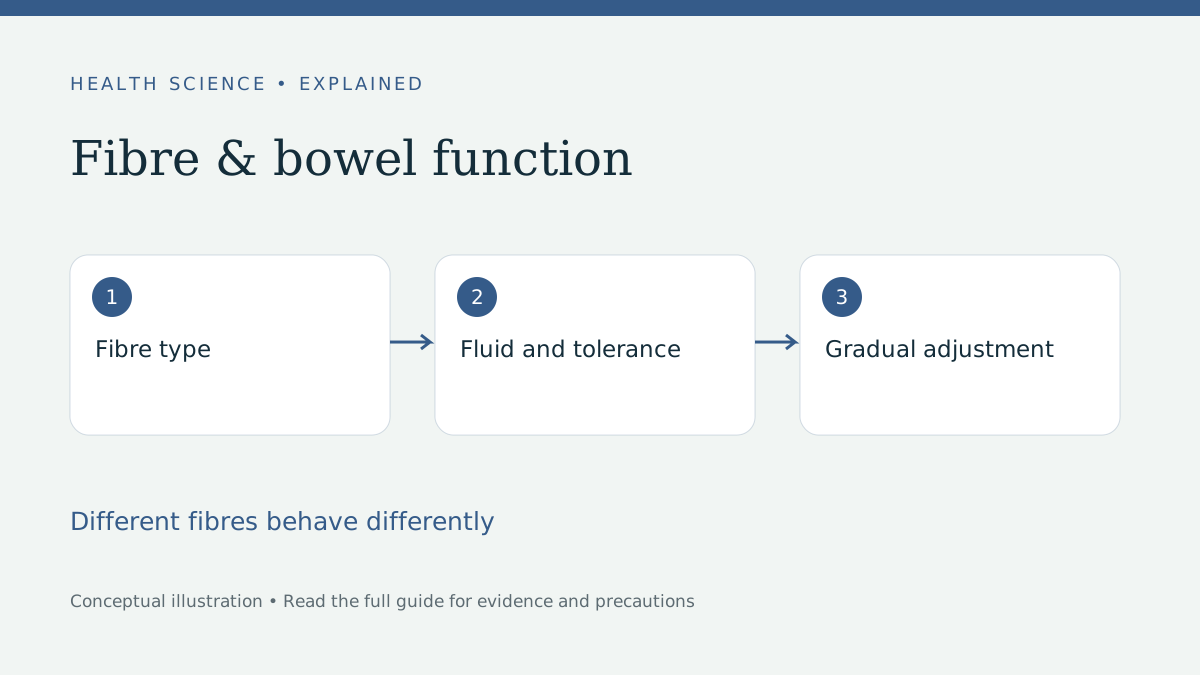
Different fibres behave differently
Dietary fibre includes a range of plant-derived substances. Some hold water and form a gel; others add bulk, and some are readily fermented by gut microbes. Foods often contain a mixture. The familiar soluble-versus-insoluble distinction is useful, but it does not predict every individual response. A fibre source that helps stool consistency may still produce gas when increased abruptly.
Oats, fruit, vegetables, pulses and whole grains can contribute fibre as part of an ordinary eating pattern. A supplement such as psyllium is a different practical option from adding a large serving of wheat bran. Product instructions and individual suitability matter, especially with swallowing difficulties or suspected obstruction. Avoid assuming that a higher number of grams must always produce a better result.
Increase gradually and observe the actual response
A sudden large increase may leave someone bloated and uncomfortable before any useful change in stool pattern appears. Start with a manageable food change and build gradually. Keep fluid intake appropriate to your health circumstances. People with prescribed fluid restrictions need advice tailored to that restriction rather than a generic recommendation to drink excessive amounts.
Track stool consistency, straining and discomfort. If a change improves frequency but substantially worsens pain, it may not be the right approach. It is easier to interpret a trial when several supplements, laxatives and dietary exclusions have not all been introduced on the same day. A short record of what changed is enough; detailed calorie accounting is not required to understand bowel response.
Routine can support the bowel without forcing it
Allow unhurried time for the toilet and respond to the urge when practical. A comfortable supported position may make evacuation easier; a small foot support can be useful for some people. Avoid prolonged straining. Ordinary movement and a regular daily routine may help, particularly after a period of inactivity or travel.
These measures should not become rigid rules that generate anxiety when life changes. The useful question is whether a routine makes bowel movements more comfortable. If there is repeated difficulty emptying despite soft stool, discuss that detail with a clinician. Simply adding more bulk may miss a problem with the mechanics of evacuation.
When diet is not enough
A pharmacist or clinician may recommend a laxative based on the symptom pattern and medical history. Different types work in different ways, so the choice and duration should be clear. Do not stop prescribed medication independently because constipation appears on its side-effect list. A review may identify a safer adjustment or a bowel-management plan that preserves the medicine's benefit.
Persistent symptoms may require investigation. This is especially important when constipation is new, progressive or accompanied by other concerning changes. Asking for help does not mean that dietary measures failed through lack of discipline. It means the mechanism may require more than food changes, and further escalation should have a clinical rationale.
Symptoms that need prompt attention
Seek urgent advice for severe abdominal pain, marked swelling, vomiting or inability to pass gas, particularly when symptoms are new or worsening. Blood in stool, unexplained weight loss, persistent fatigue or an unexplained change in bowel habit also warrant assessment. Long-standing constipation does not make every new symptom part of the same condition.
Do not attempt repeated fibre loading when bowel obstruction is a possibility. Likewise, recurring leakage of loose stool can sometimes occur around retained stool and should not automatically be treated as simple diarrhoea. Describe the full pattern to a professional before selecting another over-the-counter remedy. The correct next step depends on what is actually happening.
A practical way to judge progress
Choose an outcome that matters: less straining, softer stool or fewer days disrupted by discomfort. Review it after a reasonable trial agreed with a clinician or pharmacist. If the effect is unclear, simplify the plan rather than adding a new product every few days. Keep enough variety in the diet to support nutrition and enjoyment.
Read our IBS assessment guide if abdominal pain and alternating bowel habits are prominent. A neutral catalogue of supplements may help you inspect labels, but a product cannot determine the cause of constipation. The most reliable approach combines a clear symptom description, gradual changes and appropriate assessment when the pattern does not improve.
Continue reading
How IBS Is Diagnosed: Symptoms, Targeted Tests and Warning Signs · Lactose Intolerance: Keeping Nutrition Without Guesswork
About the author
Medicinas Editorial Team prepares educational articles that distinguish established clinical knowledge from emerging hypotheses.
Medical note
This article provides general information, not an individual diagnosis or treatment plan. Discuss persistent or changing symptoms with a qualified healthcare professional. Seek urgent care for the warning signs described above.