
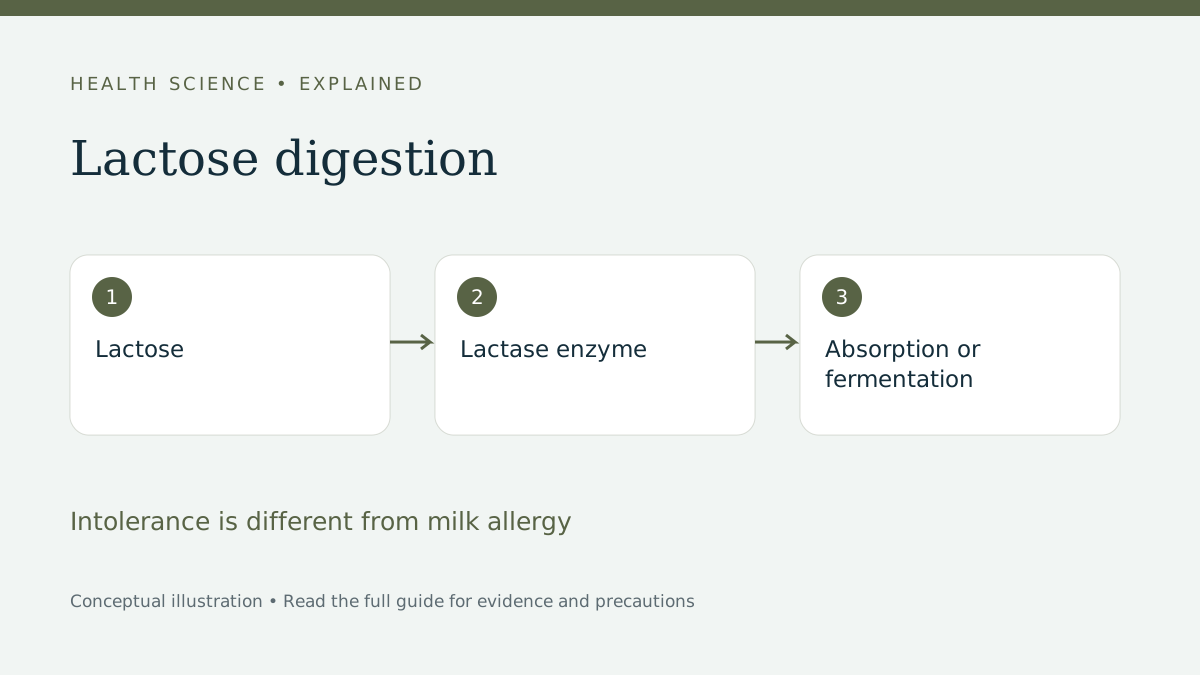
The problem is lactose digestion
Lactose is the sugar naturally present in milk and many dairy foods. The enzyme lactase helps break it down in the small intestine. When digestion is incomplete, lactose can reach the colon, where it contributes to gas production and changes in fluid movement. This can cause bloating, cramps, wind or diarrhoea. The response depends partly on the amount consumed and the individual.
Lactose malabsorption and lactose intolerance are related but not identical terms. Malabsorption describes incomplete digestion; intolerance refers to symptoms associated with it. Not everyone with reduced lactase activity experiences the same symptoms. That distinction helps explain why a person may tolerate one food or portion but react to another without the experience being inconsistent or imaginary.
Do not confuse intolerance with allergy
Milk allergy involves an immune reaction to milk proteins. Lactose intolerance concerns digestion of a sugar. Lactose-free dairy can therefore be useful for someone with lactose intolerance while remaining unsuitable for someone with milk allergy. The words dairy-free and lactose-free do not describe the same thing.
Sudden swelling of the lips or throat, difficulty breathing, collapse or a rapidly developing severe allergic reaction requires emergency care. These are not symptoms to manage by taking lactase. If the history is unclear, seek assessment before experimenting with foods that may have caused an allergic reaction. This distinction is particularly important when advising for children, whose nutritional needs and evaluation require individual attention.
A pattern is more useful than a broad food ban
Record what was eaten, the approximate portion and when symptoms began. Milk in a large drink, a small amount in cooking and a portion of hard cheese do not necessarily deliver the same lactose load. Meals also contain other ingredients that may contribute to symptoms. A reaction after a milkshake does not prove that every dairy food is a problem.
Avoid making several restrictions simultaneously if there is no urgent reason to do so. Otherwise it becomes difficult to know whether improvement came from reducing lactose, changing portion size or altering another component of the meal. A structured trial with professional guidance can be more informative than repeatedly switching among restrictive diets based on the latest bad day.
How clinicians assess suspected intolerance
Assessment uses the history and may include a temporary dietary change or a hydrogen breath test. During a breath test, measurements after a lactose-containing drink help assess whether lactose is being incompletely digested. The result should be interpreted with symptoms and the wider clinical picture. Testing is a tool for answering a question, not a substitute for a careful history.
Other conditions can resemble lactose intolerance or contribute to temporary lactase reduction. Persistent unexplained diarrhoea, weight loss, blood in stool or substantial pain should not be attributed to dairy without review. If intolerance seems to start abruptly after an illness, tell the clinician when the change occurred. A new symptom pattern may warrant investigation beyond food selection.
Preserving calcium, protein and everyday variety
The objective is to reduce troublesome symptoms while keeping the diet nutritionally adequate. Some people tolerate smaller portions of lactose-containing foods, especially within meals. Lactose-free dairy is another option. If choosing plant-based alternatives, compare labels for calcium fortification, protein and added sugars rather than assuming every product replaces milk nutritionally.
A dietitian can help when several food groups are already restricted or when intake is limited by other medical conditions. Removing dairy without a replacement plan can unintentionally reduce important nutrients. Supplements may be appropriate in selected cases, but they should answer an identified nutritional need rather than automatically accompany every suspected intolerance.
Lactase products and label reading
Lactase enzyme products may help some people digest lactose when used according to instructions. The effect depends on the product, timing and amount of lactose consumed. They do not treat milk allergy and should not be used to explain away symptoms that need assessment. Keep expectations specific: the purpose is assistance with lactose digestion, not a general repair of the digestive system.
Read ingredient lists on packaged foods, because lactose may appear in products that are not obviously dairy-based. At the same time, avoid becoming unnecessarily alarmed by tiny amounts or unfamiliar ingredient names. The relevant issue is actual tolerance and the clinical context. A pharmacist can clarify questions about lactose in medicines; do not stop a prescription because of an ingredient concern without advice.
Review the explanation when the pattern changes
If symptoms continue despite a well-conducted lactose reduction trial, reconsider the diagnosis rather than expanding restrictions indefinitely. IBS, infection and other digestive disorders may overlap with the presentation. An improvement after removing one food is useful information, but it is not always proof of a single mechanism.
Read our guide to IBS diagnosis for the broader assessment pathway. A practical plan should leave you able to eat with confidence, explain what you tolerate and recognise when a symptom no longer fits the established pattern. The best result is not the longest forbidden-food list; it is a clear explanation and a sustainable diet.
Continue reading
How IBS Is Diagnosed: Symptoms, Targeted Tests and Warning Signs · Constipation and Fibre: Why Type and Pace Matter
About the author
Medicinas Editorial Team prepares educational articles that distinguish established clinical knowledge from emerging hypotheses.
Medical note
This article provides general information, not an individual diagnosis or treatment plan. Discuss persistent or changing symptoms with a qualified healthcare professional. Seek urgent care for the warning signs described above.