A measurement is not an identity
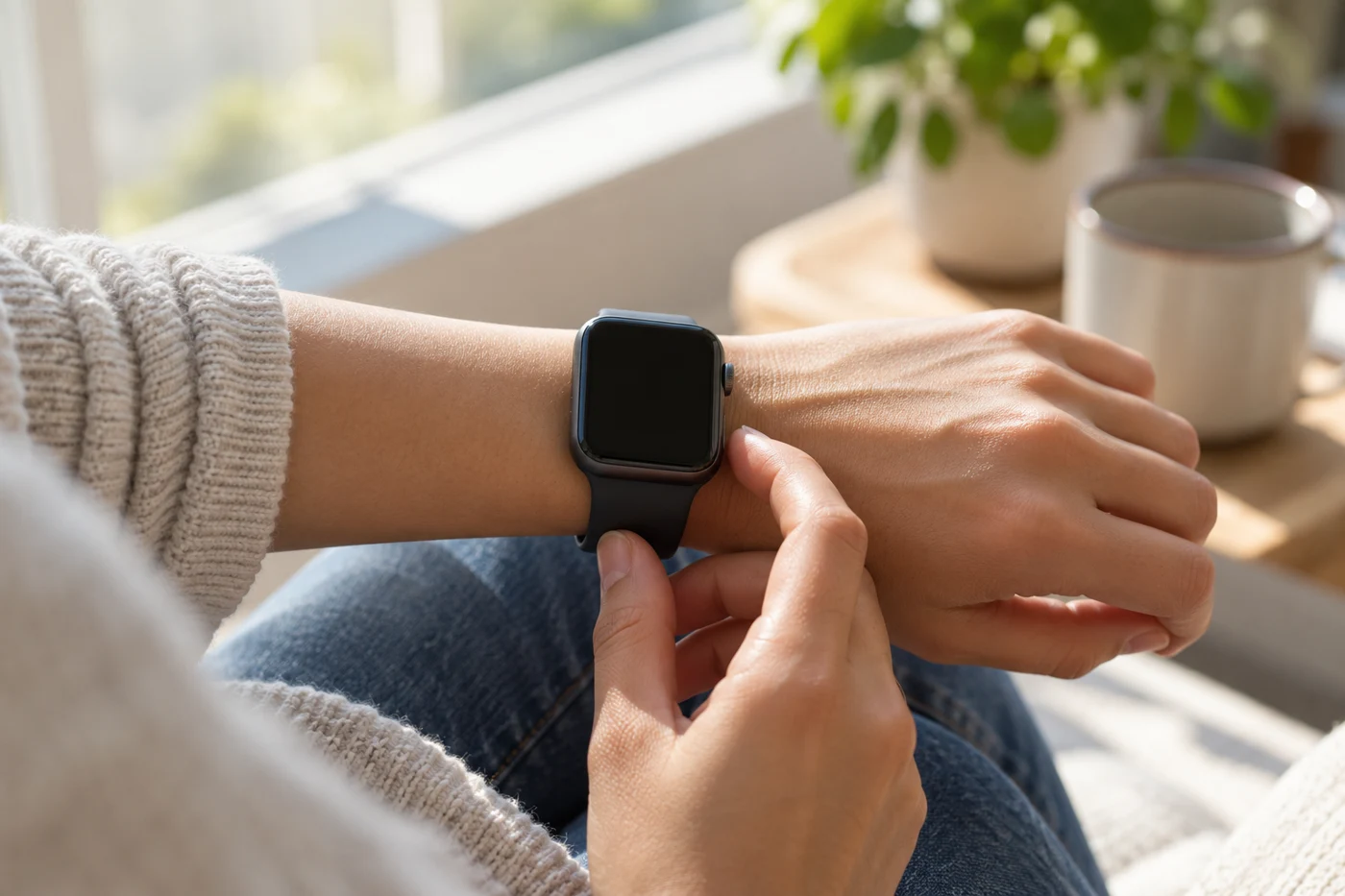
A low recovery score can change a morning before the day has begun. A person wakes feeling reasonably well, checks a wearable, sees an unfavourable number and begins searching the body for evidence that something is wrong. The measurement has become more than information. It has become an instruction about how to feel. That is the first relationship with heart rate variability that I would question: the habit of granting a device authority over the whole experience of being alive.
Heart rate variability, usually abbreviated HRV, describes variation in the timing between heartbeats. It is different from the average number of beats per minute. Two people can share a similar resting pulse while their beat-to-beat patterns differ. The phenomenon is scientifically useful, but its usefulness depends on what was measured, how it was measured and what question we expect it to answer. The productive aim is orientation. It is not to discover a numerical verdict on personal resilience, worth or the condition of every organ.
What the signal actually contains
The heart does not operate in isolation. Breathing, blood-pressure regulation and autonomic influences participate in the timing of its rhythm. This is why HRV attracts researchers interested in cardiovascular regulation and responses to changing demands. It is also why a simplified label such as nervous system balance can conceal more than it explains. A signal influenced by several interacting processes cannot automatically identify the contribution of each one.
The 2026 physiological guidelines emphasise that HRV should not be treated as a specific measure of cardiac sympathetic activity or a simple ratio of sympathetic to parasympathetic control. This is an important boundary around popular language. Calling a score low vagal tone does not establish that a single nerve is damaged or that a person is biologically unsafe. In my view, regulation is a useful organising concept only when it remains connected to the actual limits of the observation. The name of a concept must never become stronger than the evidence behind it.
Different metrics answer different questions
An app may show RMSSD, SDNN, a transformed score or an unexplained proprietary scale. These are not simply different fonts for the same measurement. Recording length also matters: a short resting segment and a full-day recording describe different windows of physiology. Published reference values cannot be moved freely between methods, populations and recording durations. An impressive-looking comparison can therefore be invalid before any interpretation begins.
A reasonable first step is to learn what the device actually reports. Does it estimate pulse intervals optically, or use an electrocardiographic signal? When does it collect the data? Does it discard movement and artefacts? Has the measurement method been evaluated for the conditions in which it is being used? Most consumers cannot audit an algorithm, but they can recognise unanswered questions. Comparing two brands' scores as if they were laboratory-equivalent measurements is less informative than following a consistent method over time.
Why yesterday and today may differ
The Australian Institute of Sport places HRV within a broader monitoring process for athletes rather than presenting it as an isolated command. The useful lesson extends beyond sport: measurements need context. A different posture, recording time or breathing pattern can change the conditions of comparison. The issue is not that every fluctuation is meaningless. It is that a fluctuation cannot explain itself.
A practical record can place the number beside a few ordinary observations: whether sleep was unusually disrupted, whether training or work demands changed, whether alcohol was consumed and whether illness symptoms are developing. Record these without building an elaborate surveillance system around the day. The purpose is to avoid an unsupported story, not to produce twenty competing stories. A trend that coincides with several days of feeling unwell deserves a different response from a single unusual value after a changed measurement routine.
Breathing can change a score without proving recovery
Slow breathing can alter respiratory patterns in the heartbeat. This makes breathing relevant to HRV measurement and biofeedback, but it also creates a common interpretive trap. If someone deliberately changes breathing while measuring and obtains a different score, that does not by itself prove that chronic stress has resolved or that a treatment has repaired disease. The conditions of measurement have changed along with the number.
This distinction is not an argument against calm breathing. It is an argument for naming the outcome accurately. A person may find a comfortable breathing practice useful for settling attention or reducing perceived tension. Those are meaningful experiences. They should be evaluated as experiences, alongside safety and function, rather than inflated into evidence about immunity, trauma release or cellular regeneration. A breathing practice should not involve forcing the breath, chasing dizziness or treating an uncomfortable response as a necessary sign of progress.
The problem with sympathetic versus parasympathetic arithmetic
The LF/HF ratio is sometimes marketed as a direct readout of two opposing branches of the autonomic nervous system. Billman's methodological critique explains why this interpretation is unreliable: frequency components do not map neatly onto single biological controls. Turning a complicated physiological relationship into a seesaw graphic can make it memorable while making it less accurate.
The wider behavioural lesson is that a reassuring diagram is not a substitute for measurement validity. Before accepting a dashboard's interpretation, ask whether the underlying variable really measures the stated construct. Stress is not a substance that a wrist sensor directly collects. Emotional distress, physical workload, sleep loss, infection and cardiovascular conditions are different realities. They may interact, but they cannot all be diagnosed by renaming one number. The more consequential the decision, the less sensible it is to rely on a single indirect indicator.
A useful way to work with trends
If HRV tracking is already part of your routine, make its role deliberately modest. Use the same device and broadly comparable conditions, review trends at planned intervals and interpret them alongside symptoms, function and established health measurements. A low value does not automatically require a supplement, a cancelled day or an urgent attempt to increase it. A high value does not give permission to ignore chest pain, fainting or other concerning symptoms.
Consider a hypothetical week of demanding work. The score declines, sleep becomes fragmented and usual exercise feels harder. The useful response might be a realistic adjustment to workload and recovery, followed by reassessment. It would be unreasonable to conclude that the device has diagnosed burnout, identified a hormone disorder or selected the correct medicine. The value of the data lies in improving the next question: what changed, what can be adjusted safely, and what needs professional assessment?
When tracking becomes another source of activation
A tool is serving its purpose when it improves decisions without consuming the person using it. If repeated checking produces alarm, compulsive comparison or a persistent sense of failing at recovery, the monitoring itself has become part of the load. It can be reasonable to reduce checking, discuss the anxiety with a clinician or temporarily stop a nonessential metric. That is not a rejection of science. It is a recognition that measurement has behavioural consequences.
My position is straightforward: the body deserves attention without being placed on trial each morning. Useful regulation includes the capacity to tolerate ordinary variation and uncertainty. The strongest relationship with a wearable is neither blind obedience nor automatic dismissal. It is informed proportion. Let the measurement contribute one piece of the picture, give symptoms and daily function their proper weight, and reserve clinical conclusions for an assessment capable of supporting them. A more intelligent use of technology often begins by asking it to claim less.
Decide the action before collecting more data
A useful monitoring habit includes a decision rule established in advance. Ask what information would lead to a safe, proportionate change and what information would simply be noted. Without that distinction, every new measurement invites another interpretation. For a recreational exerciser, the relevant action may be discussing persistent fatigue with a clinician rather than changing training on the basis of a single score. For an athlete, a coach and support team may integrate several measures within a planned process.
If no plausible decision depends on the number, collecting it more often may offer little benefit. This is an original practical principle rather than a validated HRV treatment algorithm: measure with a purpose, keep the consequences proportionate, and distinguish an observation from an instruction. The tool should help clarify a decision that belongs to the person and their care team.
Related reading
Panic and Autonomic Arousal: Understanding the Alarm Without Ignoring the Body · Chronic Insomnia and Hyperarousal: Why Trying Harder Can Keep Sleep Away · Sleep Apnea and Concentration: When Brain Fog Begins at Night · Migraine Aura: Recognising the Pattern Without Missing an Emergency
About the author
Gabriel Nicolaev – CyGuru writes about nervous system regulation, health and human behaviour. This article distinguishes clinical evidence from the author’s interpretive framework.
Medical note
This article is general education, not an individual diagnosis or treatment plan. Discuss persistent symptoms and changes to treatment with a qualified clinician. Seek urgent medical help for severe, sudden or rapidly worsening symptoms.
References
- Carter and colleagues: HRV rigor and reproducibility guidelines, 2026
- Australian Institute of Sport: Heart rate variability
- Shaffer and Ginsberg: HRV metrics and norms
- Laborde and colleagues: HRV research recommendations
- Billman: Limits of the LF/HF ratio
Gabriel Nicolaev – CyGuru