Recovery needs a task, not only a theory
Neuroplasticity describes the nervous system’s capacity to change. After a stroke, that idea can offer hope, but it can also become a slogan attached to almost any intervention. My starting point is more practical: which activity matters to the person, what currently limits it and how can practice be made safe enough to repeat? A hand reaching for a cup, a sentence spoken to a partner or a transfer from bed to chair provides a clearer objective than a vague instruction to activate the brain.
Recovery varies with the injury, previous health, complications and access to rehabilitation. Improvement is not evidence that someone believed strongly enough, and slow progress is not a moral failure. A useful plan respects biological uncertainty while still giving the person something concrete to work towards.
What purposeful repetition adds
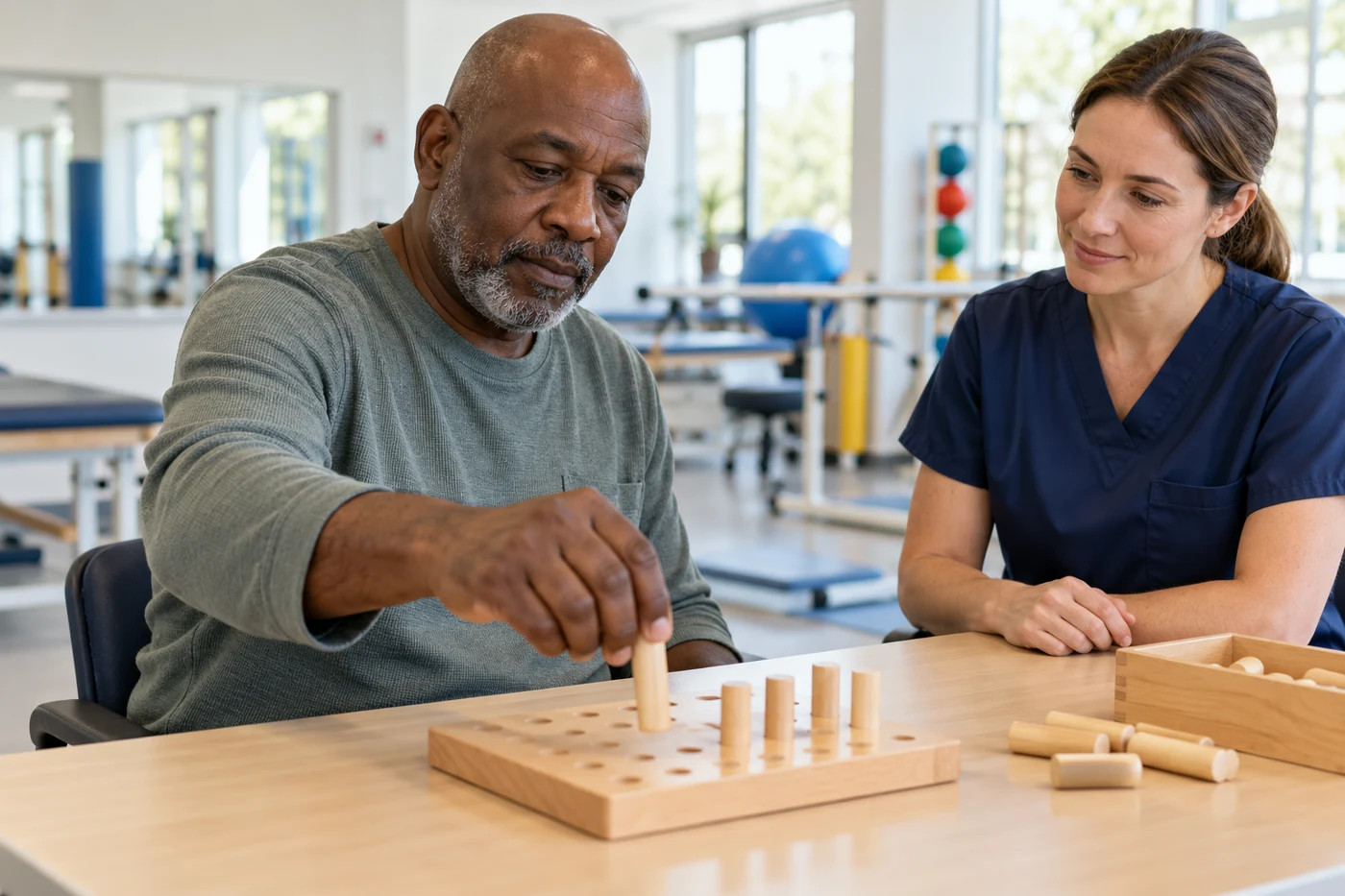
Repetition is most useful when it relates to a function that someone needs. NICE recommends repetitive task training after stroke for activities involving the arms and legs, including grasping, manipulating objects, transfers and walking. This guidance concerns structured rehabilitation, not simply doing the same movement as many times as possible. [1]
The therapist’s role includes selecting the task, adjusting difficulty and observing how it is performed. A task that is too demanding may produce compensations, frustration or unsafe fatigue. One that is too easy may not challenge the relevant skill. The productive space is individual: an achievable action with enough challenge to require attention, accompanied by feedback that the person can use.
A movement result is not the whole result
Being able to perform an action in a quiet treatment room does not automatically mean it can be used in a kitchen or on a pavement. Everyday environments add distractions, time pressure, uneven surfaces and the need to divide attention. Rehabilitation therefore needs to consider where a skill will actually be used.
A meaningful outcome might be greater independence, less help from a family member or the confidence to participate in a familiar activity. These outcomes can coexist with persistent impairment. Adapted equipment or a different technique should not be dismissed as giving up on recovery. They may reduce risk and allow participation while other abilities continue to develop. The relevant question is whether the approach improves life, not whether it fits an idealised picture of complete restoration.
Match the load to the whole person
Stroke can affect language, attention, vision, mood and endurance as well as movement. A person who appears physically able may still struggle to understand instructions or sustain concentration. Another may understand everything but need more time to express a response. Treating these differences as lack of motivation can damage the therapeutic relationship.
Ask the rehabilitation team how practice should be divided across the day and what signs indicate that the load needs changing. Rest and activity do not have to be opposing philosophies. A schedule can protect time for both. Written or visual instructions, a consistent setup and a family member trained in the agreed approach can make home practice more dependable without turning every interaction into a test.
Use progress measures without becoming trapped by them
Simple records can show whether an action is becoming easier or more reliable. Examples include the level of assistance needed or the ability to complete a defined activity in the usual environment. The measure should be chosen with the team so that it reflects safety and function rather than speed alone.
A disappointing day is not the same as a permanent plateau. Sleep, illness, pain, emotional strain and changes in routine can influence performance. Review trends and discuss a persistent change. Avoid interpreting every fluctuation as evidence of new brain damage or a failure of neuroplasticity. At the same time, new neurological symptoms require urgent assessment rather than being folded into an existing rehabilitation explanation.
Keep prevention and medical care inside the plan
Rehabilitation does not replace the medical work of reducing further stroke risk. Prescribed medicines and follow-up may address blood pressure, clotting, cholesterol or other factors according to the stroke type and individual history. Never stop an antiplatelet or anticoagulant because a supplement is marketed for circulation or brain support.
New facial weakness, arm weakness, speech difficulty, sudden visual loss or another sudden neurological change should be treated as an emergency. Recovery education is not a method for deciding at home whether a new event is serious. A person with an old stroke can still have a new stroke, and rapid assessment remains important.
Where a book or product belongs
The Nervous System Code offers my wider author framework about regulation and human behaviour. It can be read alongside this article as a perspective on experience, not as evidence that a particular stroke rehabilitation method works. The book’s official description is the basis for the reading link; this article does not claim that an unavailable manuscript has been clinically assessed.
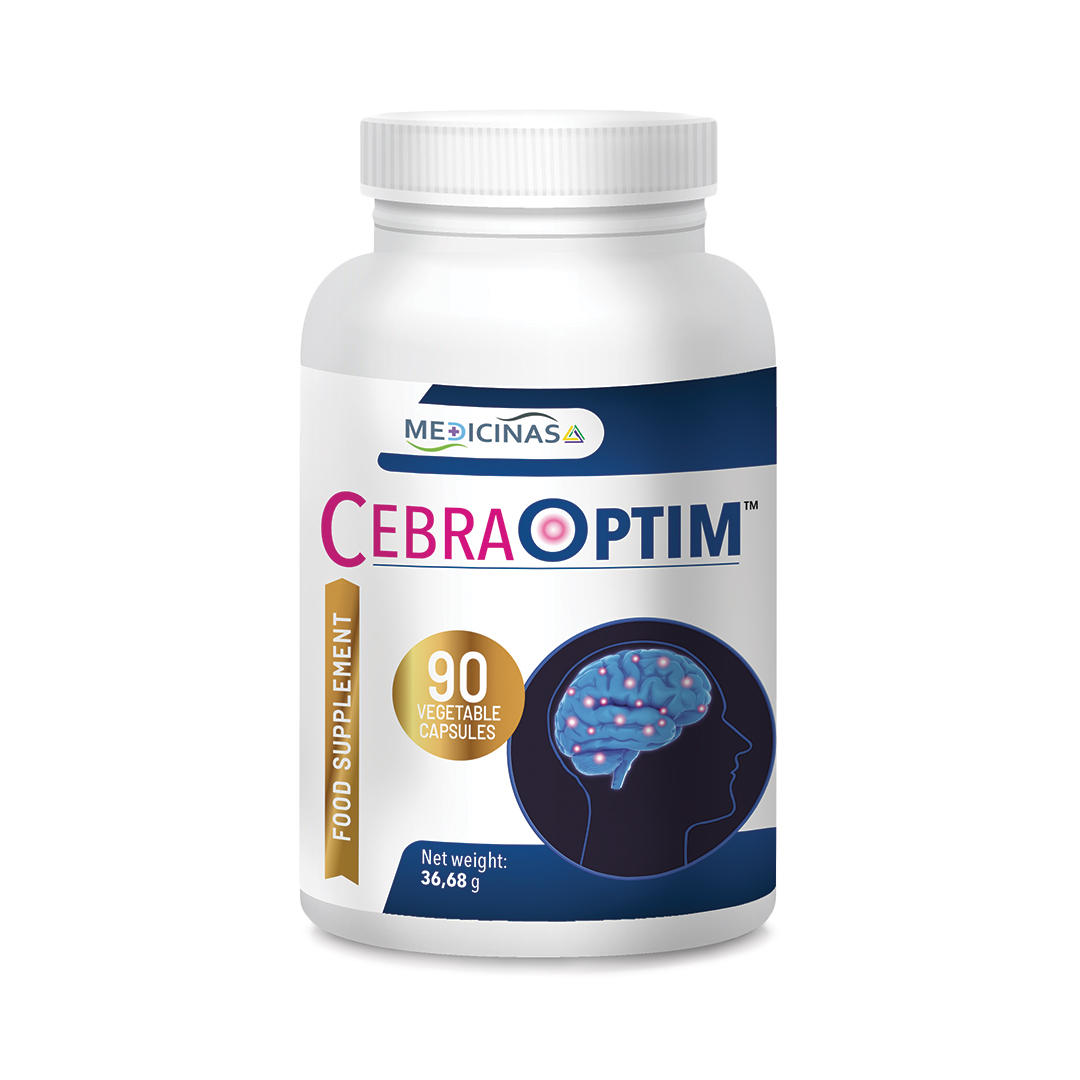
Cebraoptim is linked below for transparent ingredient information. Its listed formula includes citicoline, Bacopa, Centella, Hericium, coenzyme Q10, phosphatidylserine, Ginkgo and Griffonia. This article does not establish that the combined product improves stroke outcomes. Ask a pharmacist or stroke clinician to review the full label against all medicines before considering it. Rehabilitation, secondary prevention and individual medical advice remain the foundation.
Related reading
- Peripheral Neuropathy: Why Tingling Feet Need a Cause, Not a Guess
- Home Blood Pressure Monitoring: Make the Measurement Useful
- Pain Sensitisation: When the Nervous System Changes the Volume
Author and medical note
Written by Gabriel Nicolaev – CyGuru. This article provides general educational information and is not an individual diagnosis or treatment plan. Consult a qualified clinician about persistent symptoms, medical conditions, pregnancy or medicine interactions. No independent medical review is claimed.