
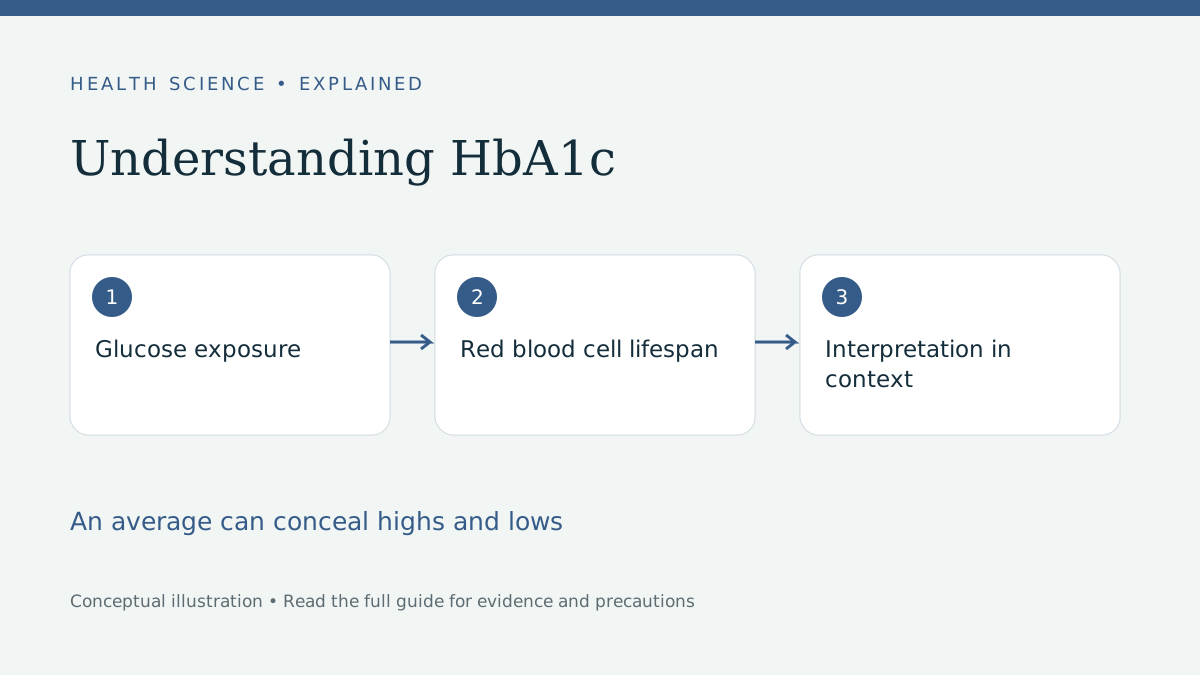
HbA1c is often presented as a three-month glucose score. That description is convenient, but incomplete. The test measures glycated haemoglobin, meaning haemoglobin with glucose attached to it. Its interpretation depends both on glucose exposure and on the red blood cells carrying that haemoglobin. A result can therefore be informative without being a perfect summary of every day.
When HbA1c and home glucose readings appear inconsistent, the response should be investigation rather than blame. The difference might reflect when glucose was checked, biological variation, a change in red blood cell turnover, or interference with the laboratory method. These possibilities require different solutions.
An average does not describe every fluctuation
HbA1c reflects average glucose exposure over roughly the preceding two to three months, with more recent glucose contributing importantly. It does not show whether the same average came from relatively stable readings or large swings between high and low values. Two people with a similar result can therefore have very different day-to-day experiences.
This matters especially for people using medicines that can cause hypoglycaemia. A lower average is not automatically better if it is accompanied by dangerous lows. Symptoms, medication, finger-prick readings and, where appropriate, continuous glucose monitoring provide complementary information. The treatment goal should be individualized with the clinical team rather than copied from another person's report.
Red blood cells influence the interpretation
Red cells remain in circulation for a limited time. Conditions that shorten their survival can lower HbA1c relative to the glucose exposure that would otherwise be expected. Blood loss, haemolysis and some treatments can complicate interpretation. Recent transfusion introduces another layer of uncertainty because the measured cells do not all reflect the recipient's previous glucose history.
Iron deficiency can sometimes produce a falsely elevated result. Kidney disease, liver disease and pregnancy may also change how the test should be used. These are not reasons to assume every unexpected HbA1c is inaccurate. They are reasons to share relevant medical history and ask whether the test remains suitable in the current situation.
Laboratory method also matters
Some haemoglobin variants interfere with particular HbA1c assays. The direction and degree of interference depend on the variant and the method. A person with a variant may have a reliable result from one method and a misleading result from another. The NGSP maintains information on method-specific interference, which laboratories and clinicians can consult.
A variant is not synonymous with poorly controlled diabetes. Nor does ancestry establish whether a person has a variant or whether their particular result is affected. If a discrepancy raises concern, the appropriate response is to check the clinical and laboratory evidence. Guessing the cause from identity or family background alone can lead to the wrong conclusion.
Check the comparison before rejecting the test
Home glucose measurements sample particular moments. Someone who checks only before breakfast may not capture higher readings after meals. A recently improved routine may produce reassuring current readings while HbA1c still reflects earlier weeks. Conversely, recent deterioration may not yet be fully represented by the average. Timing is therefore part of the explanation.
Review how the home meter is used, whether strips are in date and stored correctly, and whether the record includes the times of testing. If using a glucose sensor, discuss data completeness and the difference between an estimated glucose-derived metric and a laboratory HbA1c. These measures are related, but they are not interchangeable laboratory procedures.
What a clinician may do next
Depending on the situation, the clinician may repeat the test, use a different assay, review a blood count, investigate iron deficiency or compare with plasma glucose testing. Alternative markers such as fructosamine or glycated albumin may sometimes be considered. They have their own limitations and reflect a different time window; replacing one number with another does not eliminate the need for interpretation.
For diagnosing diabetes, confirmation is usually needed when there are no unequivocal symptoms or other clear evidence. Do not diagnose yourself from one unexpected number, and do not assume an apparently normal HbA1c excludes every glucose problem. The correct diagnostic pathway depends on the context and the tests available.
Turn uncertainty into a useful appointment
Bring the laboratory report, glucose log or sensor summary, medication list and information about recent blood loss, transfusion, pregnancy or anaemia treatment. A clear question is: “Does this HbA1c fit my glucose pattern, and is there any reason it could be misleading?” That invites a structured review instead of an argument over which measurement is right.
Do not change insulin or other glucose-lowering medication solely because an online calculator suggests a different average. Severe symptoms or suspected hypoglycaemia require immediate action according to the care plan, not waiting for the next HbA1c test. The value of HbA1c lies in its place within a broader assessment: powerful information when understood, incomplete information when treated as the whole story.
Continue reading
Home Blood Pressure Monitoring: Make the Measurement Useful · LDL Cholesterol and ApoB: Two Different Questions About Risk
About the author
Medicinas Editorial Team. Educational reporting on medical evidence, practical health decisions and the responsible interpretation of research.
Medical note
This article provides general education, not an individual diagnosis or treatment plan. Discuss persistent symptoms, test results and treatment changes with a qualified healthcare professional.
References
- NIDDK: The A1C test and diabetes
- NIDDK: Interpreting A1C and haemoglobin variants
- NGSP: Factors interfering with HbA1c
- Mayo Clinic: A1C test
- Clinical Chemistry: Laboratory analysis in diabetes
Continue exploring: Type 2 Diabetes Remission: A Clinical Milestone, Not a Permanent Cure.